The lab-scale esterification that would normally crawl at room temperature can be pushed to completion in a fraction of the time by adding a few drops of concentrated sulfuric acid. That simple observation captures why sulfuric acid has earned its place as one of the most widely used acid catalysts in chemistry. It is not simply that sulfuric acid is strong; it is that sulfuric acid performs two jobs at once. It donates protons to activate reactant molecules, and in concentrated form, it also removes water from the reaction environment. Those two complementary roles make it the catalyst of choice for reactions ranging from the familiar Fischer esterification to the production of bio-based furan intermediates such as 5-hydroxymethylfurfural.
The catalytic power of sulfuric acid begins with its acidity. The first proton of sulfuric acid dissociates almost completely in water, with a pKa near -3, placing it among the strongest common mineral acids. When a reactant contains a lone pair of electrons, such as the carbonyl oxygen of a carboxylic acid or the hydroxyl oxygen of an alcohol, that pair is readily attracted to the proton released by sulfuric acid. The result is a positively charged intermediate that is far more reactive than the neutral starting molecule.
In an esterification, for example, the carbonyl oxygen of the carboxylic acid is protonated, which makes the carbonyl carbon more electrophilic and therefore more susceptible to attack by the alcohol. The alcohol adds, a water molecule is expelled, and the proton is regenerated at the end of the catalytic cycle. The acid is not consumed; it simply lowers the activation energy and speeds up the pathway that would otherwise require a much higher temperature.
Concentrated sulfuric acid adds a second mechanism that dilute acids cannot offer: dehydration. Because sulfuric acid has a strong affinity for water, it can pull water molecules out of the reaction mixture, shifting equilibria toward the dehydrated product. This is especially valuable in ether synthesis, alcohol dehydration, and the conversion of sugars into furan compounds, where the controlled removal of water is a key driver of yield.
Sulfuric acid catalysis appears across a broad range of industrial and laboratory chemistry. The table below summarizes the most common reaction families and the specific role the acid plays in each.
| Reaction Type | Role of Sulfuric Acid | Typical Conditions | Practical Note |
|---|---|---|---|
| Fischer esterification | Protonates the carboxylic acid to activate the carbonyl group | Reflux with alcohol, 60-110 °C, catalytic amount of acid | Water removal drives higher ester yields |
| Alcohol dehydration | Protonates the hydroxyl group, then eliminates water to form an alkene or ether | Concentrated acid, 130-180 °C depending on the alcohol | Temperature controls whether ether or alkene dominates |
| Alkylation and acylation | Generates carbocation or acylium intermediates from alkenes or anhydrides | Concentrated acid, low to moderate temperature | Careful mixing is required to avoid local overheating |
| Biomass dehydration to furans | Protonates sugars and facilitates the loss of three water molecules to form the furan ring | Aqueous or biphasic systems, 100-200 °C | Water build-up inhibits the catalyst; biphasic reactors help |
In each case, the catalytic cycle depends on the same fundamental step: a proton is transferred to the substrate, a reactive intermediate is formed, and the proton is eventually returned to the acid. The strength of sulfuric acid simply makes that proton transfer fast and efficient.
Sulfuric acid is not a single catalyst; it is a family of catalysts whose behavior shifts dramatically with concentration. In dilute aqueous solution, sulfuric acid behaves as a strong acid that fully dissociates into hydronium and sulfate or bisulfate ions. This form is useful for hydrolysis reactions, but it lacks the ability to abstract water or stabilize anhydrous intermediates.
In concentrated form, above roughly 90 percent H2SO4, the chemistry changes. The acid no longer behaves as a simple proton donor in water; it becomes an active dehydrating agent, capable of pulling water from alcohols, sugars, and even organic polymers. The same property that makes it effective in dehydration also creates a serious constraint: water is a by-product of many acid-catalyzed reactions, and accumulated water can strongly inhibit the catalytic activity. Studies of sulfuric acid catalyzed esterification have found that catalytic activity can drop by as much as 90 percent when water accumulates in the reaction medium. This is why many industrial processes using sulfuric acid employ continuous water removal, whether through azeotropic distillation, a Dean-Stark trap, or a biphasic solvent system that extracts water away from the catalyst.
One of the most interesting modern applications of sulfuric acid catalysis sits at the intersection of traditional acid chemistry and renewable materials. The dehydration of fructose or glucose to 5-hydroxymethylfurfural (HMF) is a textbook example of acid-catalyzed biomass conversion. Sulfuric acid provides the protons that drive the loss of three water molecules from a C6 sugar, forming a furan ring with an aldehyde and a hydroxymethyl group at opposing positions.
That single reaction matters because HMF is a platform molecule for a whole family of bio-based chemicals. The dehydration step, however, is demanding. The reaction produces water as a by-product, which dilutes and weakens the acid catalyst; it also generates humins as side products when selectivity is poor. Process engineers must therefore balance acid concentration, temperature, residence time, and water removal to keep the reaction selective. For anyone working in this field, the catalytic conversion step is often where the economics of the entire process are decided. A closer look at the catalytic conversion technologies for HMF preparation can help clarify how different acid systems compare in terms of selectivity and yield.
For manufacturers that have built their product line around furan chemistry, the choice and control of the acid catalyst is not an academic detail. Zhejiang Sugar Energy Technology, a company co-founded with the Ningbo Institute of Materials Technology and Engineering of the Chinese Academy of Sciences, operates a commercial HMF production line in which the same acid-catalyzed sugar dehydration chemistry is scaled up from flasks to tons. Their flagship product, 5-hydroxymethylfurfural (HMF), is produced from starch, cellulose, sucrose, and other biomass feedstocks, and it serves as the branching point for a portfolio of downstream furan monomers.
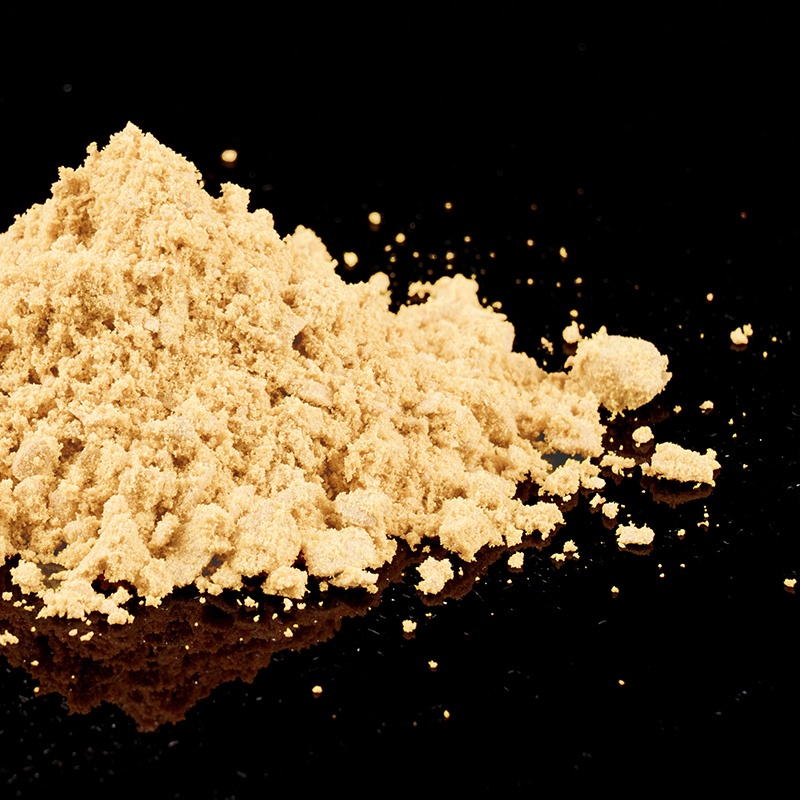 Wholesale 5- Hydroxymethylfurfural (HMF) Manufacturers, SuppliersZhejiang Sugar Energy Technology Co., Ltd. is professional China 5- Hydroxymethylfurfural (HMF) manufacturers and suppliers, we offer Who...View Product →
The influence of sulfuric acid catalysis does not end when the HMF molecule is formed. The same principles of acid-driven selectivity and water management echo through the downstream chemistry that turns HMF into polymers. Oxidation of HMF produces 2,5-furandicarboxylic acid (FDCA), a monomer widely regarded as a renewable alternative to terephthalic acid in polyester production. FDCA is then polymerized with ethylene glycol to form poly(ethylene 2,5-furandicarboxylate), better known as PEF, a polyester with superior gas-barrier properties compared with PET.
Each of these steps places additional demands on the purity of the furan intermediates. Trace impurities from an uncontrolled catalytic dehydration can color the polymer, reduce molecular weight, or create cross-linked defects that weaken the final material. The company’s 2,5-furandicarboxylic acid (FDCA) is produced as a high-purity monomer designed for polyester synthesis, while its poly(ethylene 2,5-furandicarboxylate) (PEF) resin brings the same furan building block into a ready-to-process material. Between the acid catalyst at the start and the polymer pellet at the end, every intermediate benefits from the same discipline: controlled acidity, controlled water removal, and controlled selectivity.
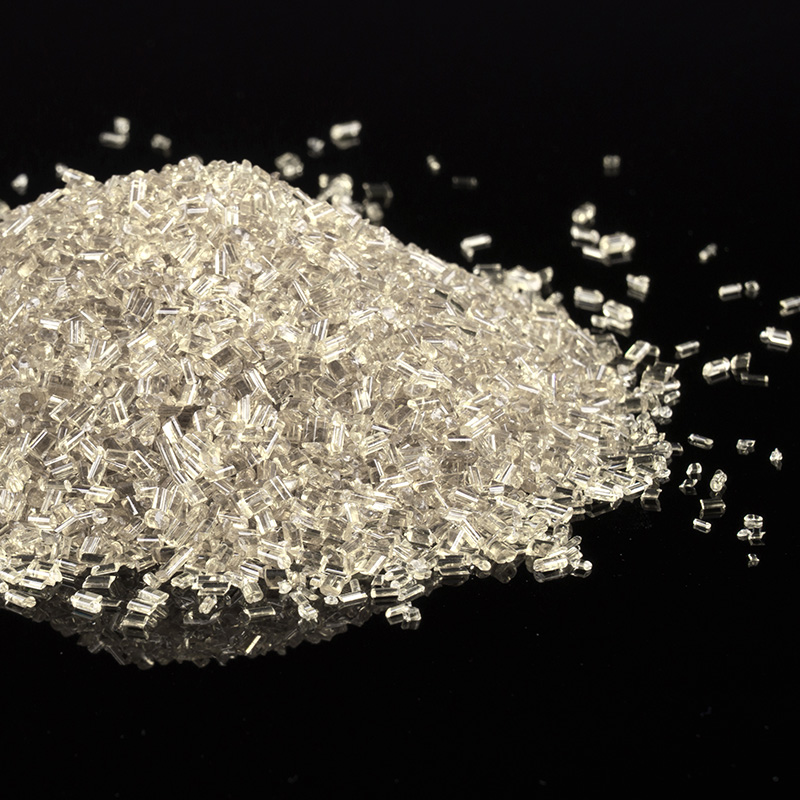 Poly (Ethylene 2,5-Furandicarboxylate) (PEF) Manufacturers, SuppliersAs China Poly (ethylene 2,5-furandicarboxylate) (PEF) manufacturers and suppliers, Zhejiang Sugar Energy Technology Co., Ltd. offer Whole...View Product →
 Custom 2, 5- Furandicarboxylic Acid (FDCA) Manufacturers, SuppliersSugar Energy Technology is China 2, 5- furandicarboxylic acid (FDCA) manufacturers and suppliers, we custom 2, 5- furandicarboxylic acid ...View Product →
Despite its effectiveness, sulfuric acid is a demanding catalyst in industrial practice. Its corrosion of stainless steel is well known, so glass-lined reactors, PTFE components, or specialty alloys are often required. Dilution of concentrated sulfuric acid is strongly exothermic, and careless water addition can cause localized boiling or splashing. Operators must also account for side reactions: concentrated sulfuric acid can sulfonate aromatic rings, oxidize sensitive functional groups, or char organic matter when temperatures are not tightly controlled.
Another practical limit is catalyst recovery. Because sulfuric acid is a homogeneous catalyst, it stays dissolved in the reaction mixture. Neutralization with a base produces a sulfate salt that must be separated and disposed of, adding cost and waste. This has encouraged research into solid acid catalysts that can be filtered and reused, though few match the raw acidity and dehydrating power of sulfuric acid at comparable cost.
The choice between sulfuric acid and a solid alternative is ultimately a question of scale, selectivity, and downstream processing. In processes where the sulfate salt can be tolerated or valorized, sulfuric acid remains the most economical option. In processes where catalyst recycling is critical, solid acids may justify their higher upfront cost through longer operating windows.
Sulfuric acid earns its reputation as a catalyst not through any single elegant mechanism, but through a combination of proton donation, dehydrating power, and low cost. It activates carbonyls, generates carbocations, removes water, and then returns to its original form, ready to catalyze the next molecule. From the small-scale esterification in a teaching lab to the thousand-ton production of HMF from biomass sugars, the chemistry is the same: the acid gives a proton, the reaction moves faster, and the acid waits for the next opportunity.
The industrial value of that simple cycle is hard to overstate. As the chemical industry shifts toward bio-based feedstocks, the same sulfuric acid catalysis that has served traditional synthesis for over a century is now being retuned for sugar dehydration, furan oxidation, and polymer building blocks. Whether you are evaluating acid catalysts for a new bio-based process or exploring furan intermediates for your own formulation work, an overview of the product portfolio can help you see how far the chemistry extends beyond the catalyst itself.

Copyright© Zhejiang Sugar Energy Technology Co., Ltd. All Rights Reserved.
 Custom Biobased Polymer Manufacturers
 英语
英语 中文简体
中文简体