Leave a jar of honey near a warm radiator for a season and two things happen. The colour deepens towards amber-brown, and the fructose and glucose inside begin shedding water molecules in a slow, acid-catalysed reaction that produces 5-hydroxymethylfurfural, known everywhere as HMF. That single figure, measured in milligrams per kilogram, is the most reliable chemical fingerprint of how much heat and time a batch of honey has been through.
The short answer: at the concentrations found in edible honey, HMF is not toxic to humans. The confusion around it comes from three separate conversations being merged into one. Laboratory screening tests on isolated HMF, animal trials using enormously high doses, and industrial hazard documentation for purified material are all genuine, but none of them describes what happens when someone spreads honey on toast.
HMF is not an additive and it is not contamination in the usual sense. It is a dehydration product that forms naturally wherever sugars meet mild acid and heat. Honey sits in exactly the right conditions for that: it is acidic, typically between pH 3.5 and 4.5, and it is rich in the very sugars that feed the reaction.
Two variables drive the numbers. Temperature matters most. The reaction accelerates sharply somewhere above 50 degrees Celsius and becomes fast during industrial pasteurisation and liquefaction. Time matters almost as much. Honey stored at room temperature for several years will accumulate HMF even with no heating at all, which is precisely why the compound doubles as a shelf-life marker.
For context, freshly extracted honey usually sits below 10 mg/kg. A batch that has been aggressively heat-treated or held in storage for a long period can cross 40 mg/kg, the ceiling written into most honey standards. That same chemistry plays out across the wider food supply, which is why HMF is treated as a general measure of processing intensity rather than something unique to honey.
It is also worth saying plainly that honey is a minor source of dietary HMF. Bread crust, roasted coffee, caramel, fruit juice and dried fruit all carry the compound at concentrations that are frequently higher than what you would find in a jar of honey.
Toxicology rarely hands over a clean yes or no, but on HMF the direction of the evidence has been consistent for a long time. The concerns are real in origin and have largely failed to hold up under whole-animal and human-relevant conditions.
HMF can produce positive results in bacterial mutagenicity screening, but usually only after metabolic activation. The reactive species in that pathway is a metabolite called sulphoxymethylfurfural, and the transformation depends on enzymes that behave very differently in a test tube than they do in a living body. A screening hit tells you a molecule deserves a closer look. It does not establish human risk on its own.
Rodent carcinogenicity studies have come back negative, and international expert panels that reviewed the compound concluded it does not behave as a genotoxic carcinogen. Human metabolism explains part of why: HMF is converted quickly, mostly into sulphoxymethylfurfural and hydroxymethylfuroic acid, and then excreted in urine. It does not accumulate in the body.
One animal study that does get cited frequently, a rat trial in which honey with a high HMF content affected enzyme activity and serum biochemical parameters, deserves an honest mention. The effect was real, and it was measured at doses far above anything a person would reach through diet. That gap is the entire argument.
Headlines calling HMF "potentially carcinogenic" trace back to early screening results and a precautionary classification that was never confirmed in feeding studies. Purified HMF carries hazard warnings because concentrated industrial chemicals are handled differently from trace amounts dissolved in food.
Dose is where this topic becomes concrete. Honey contains HMF in milligrams per kilogram. A person eats honey in tens of grams. Multiply those together and the arithmetic turns very unflattering to the frightening version of the story.
| Honey scenario | HMF content | Daily honey eaten | Resulting HMF intake |
|---|---|---|---|
| Freshly harvested raw honey | Below 5 mg/kg | 30 g | Under 0.2 mg |
| Typical retail blend | Around 20 mg/kg | 30 g | About 0.6 mg |
| Honey at the regulatory ceiling | 40 mg/kg | 50 g | 2 mg |
| Heavily heated or long-stored honey | Around 100 mg/kg | 50 g | About 5 mg |
Even the worst case in that table lands in single-digit milligrams. For comparison, an ordinary day of coffee, toast and baked goods delivers a comparable or larger HMF load without anyone raising the question at all.
Doses that produced measurable effects in animal studies sit several orders of magnitude above these figures. That gap is the reason regulators treat HMF as a quality marker in honey rather than a health limit.
Honey that has been heated does change. The disagreement is about what those changes mean.
None of those four items is a toxicity finding. They are quality findings. The popular claim that honey becomes indigestible or structurally altered above a specific temperature confuses a freshness indicator with a safety threshold, and no controlled study supports the idea that gently warmed honey harms anyone.
The practical guidance is simple and mostly about flavour. Stir honey into a dish at the end of cooking rather than boiling it for twenty minutes. If you want to liquefy crystallised honey, a warm water bath around 40 to 50 degrees Celsius will do the job in a few minutes without driving off the aromatics.
Most honey standards set an HMF ceiling of 40 mg/kg, with a higher allowance of 80 mg/kg for honey originating in tropical regions where ambient temperatures push the reaction along faster. Those limits exist for trade and quality control. They draw a line between honey that has been handled gently and honey that has been overheated, over-stored, or diluted with syrup that has itself been processed.
Read that way, the number is genuinely useful, just not as a safety warning. A high HMF figure tells you something about a supplier's process discipline. It does not tell you that the jar is dangerous.
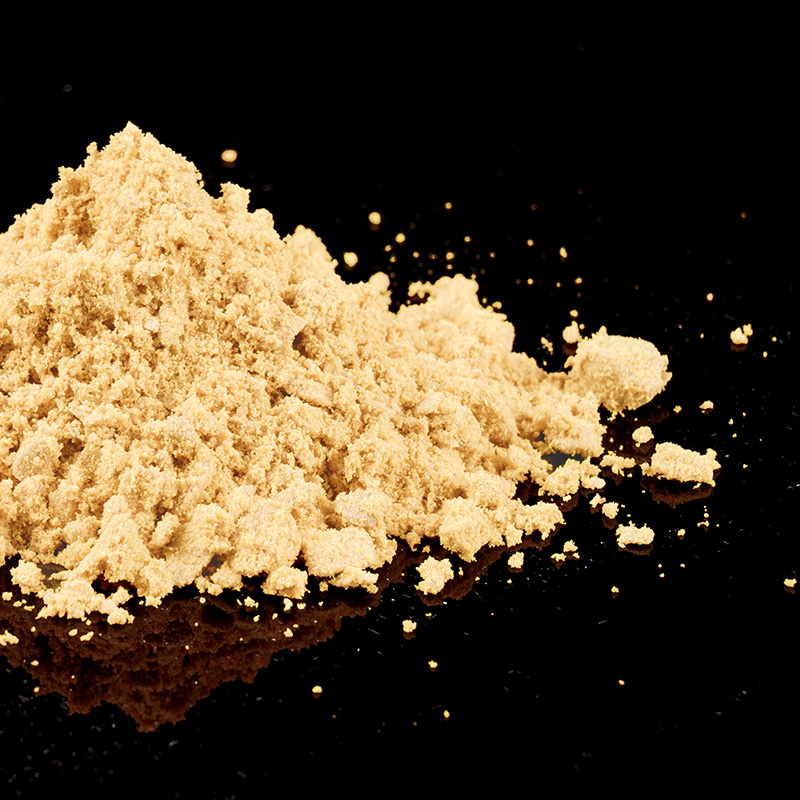
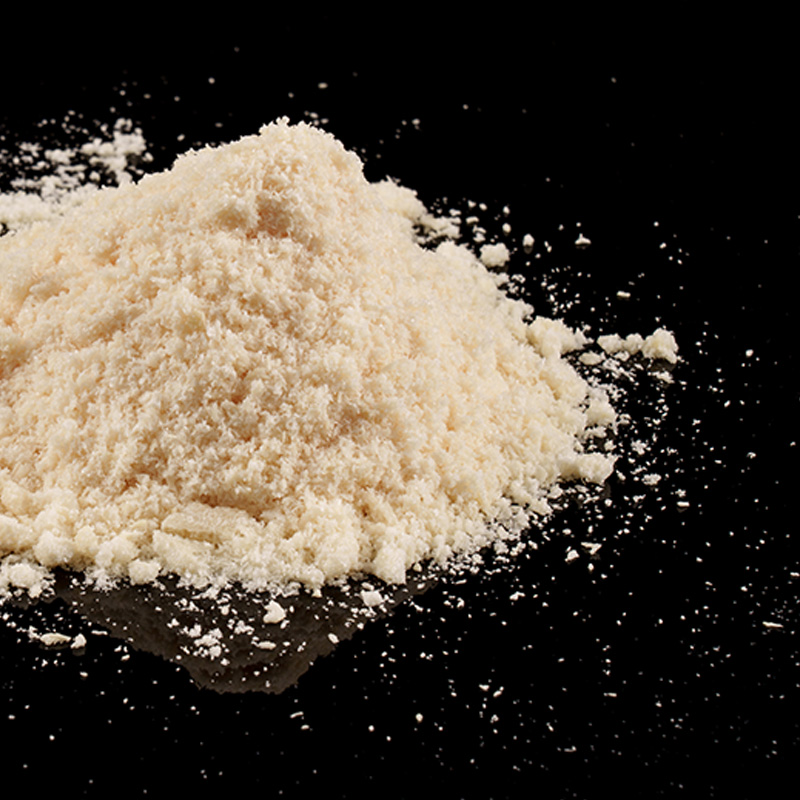
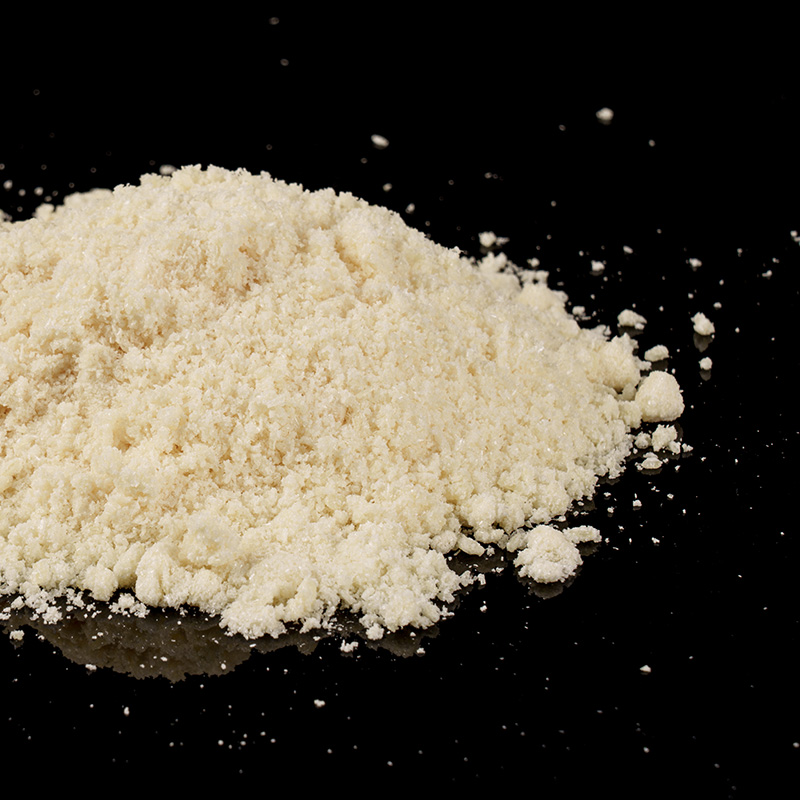
Everything above concerns HMF as a trace compound in food. In a chemical plant, HMF is the product, produced deliberately from sugar-bearing biomass such as starch, cellulose and sucrose, and specified to a purity that food never approaches. Commercial grades generally sit above 98 percent, because the downstream reactions that consume HMF, oxidation to furandicarboxylic acid among them, are sensitive to residual impurities.
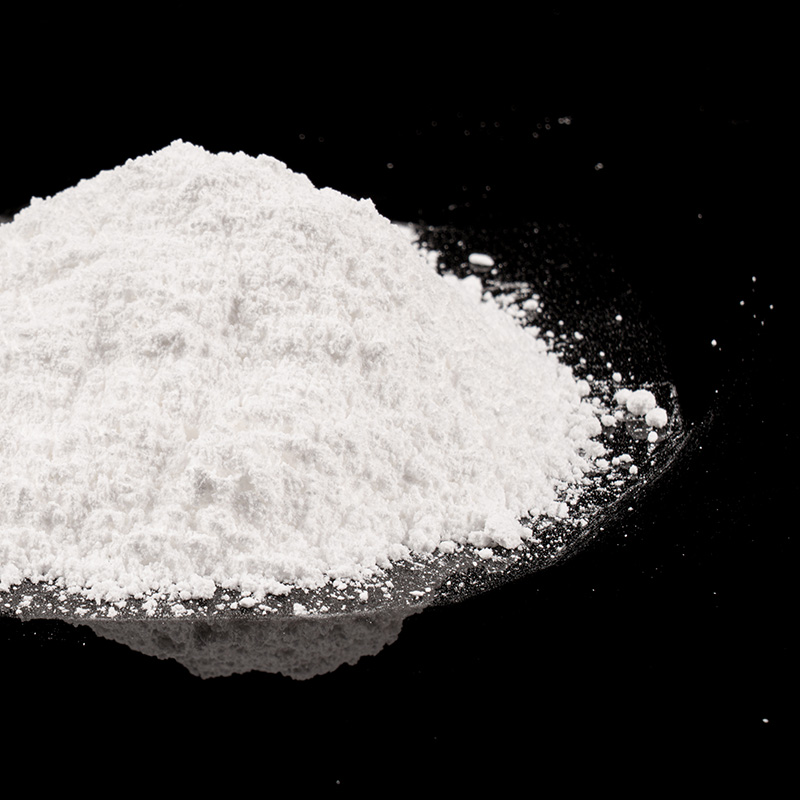
Handling requirements follow from that concentration rather than from any food-safety question. The material is hygroscopic and reactive, so it is stored cool, sealed and out of direct light; at elevated temperatures it will self-condense. As a powder it generates dust, and the sensible precautions are the ordinary ones for fine organic solids: gloves, eye protection and adequate ventilation.
Occupational exposure limits exist for people who handle purified HMF daily. They do not translate into a dietary threshold for honey, because exposure route, concentration and duration are nothing alike.
HMF in honey is a freshness marker, not a poison. The 40 mg/kg figure describes what happened to the honey on its way to your shelf, not what it will do to you.
At the concentrations people actually eat, HMF does not pose a toxicological problem. The compound is metabolised and cleared, the animal evidence points away from carcinogenicity, and the intake arithmetic leaves a margin of several orders of magnitude between a heavy honey habit and the doses used in laboratory work.
What deserves attention is narrower than the headlines suggest. Heat changes honey's flavour, colour and enzyme content, and a high HMF reading is a fair signal that a product has been processed hard or stored too long. Treat it as a quality cue and buy accordingly. In its purified industrial form, HMF is a genuine handling consideration, but that is a matter for people working with kilograms of the material rather than anyone reaching for a teaspoon.

Copyright© Zhejiang Sugar Energy Technology Co., Ltd. All Rights Reserved.
 Custom Biobased Polymer Manufacturers
 英语
 中文简体