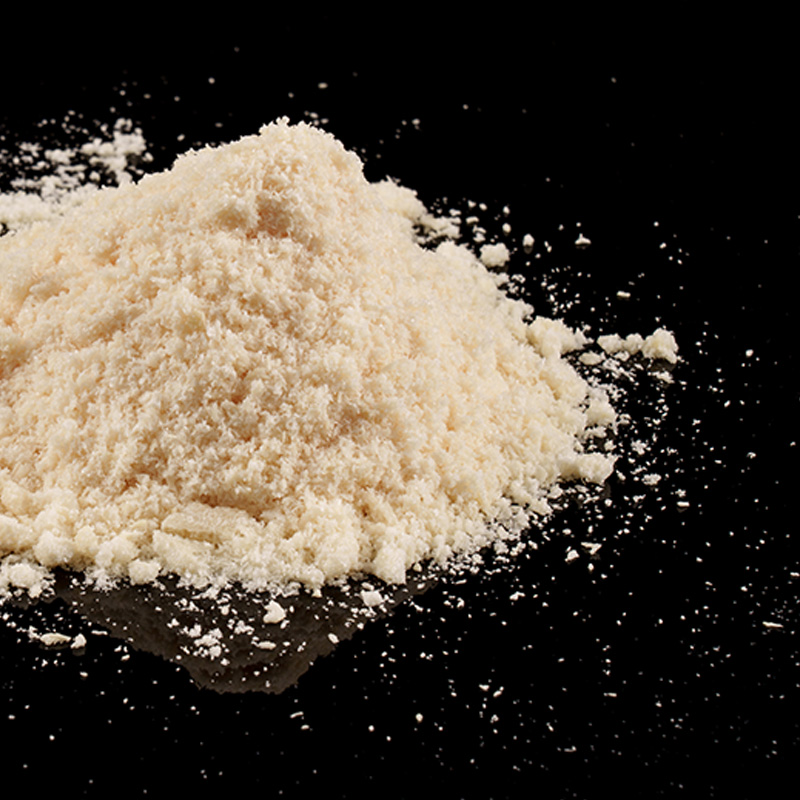
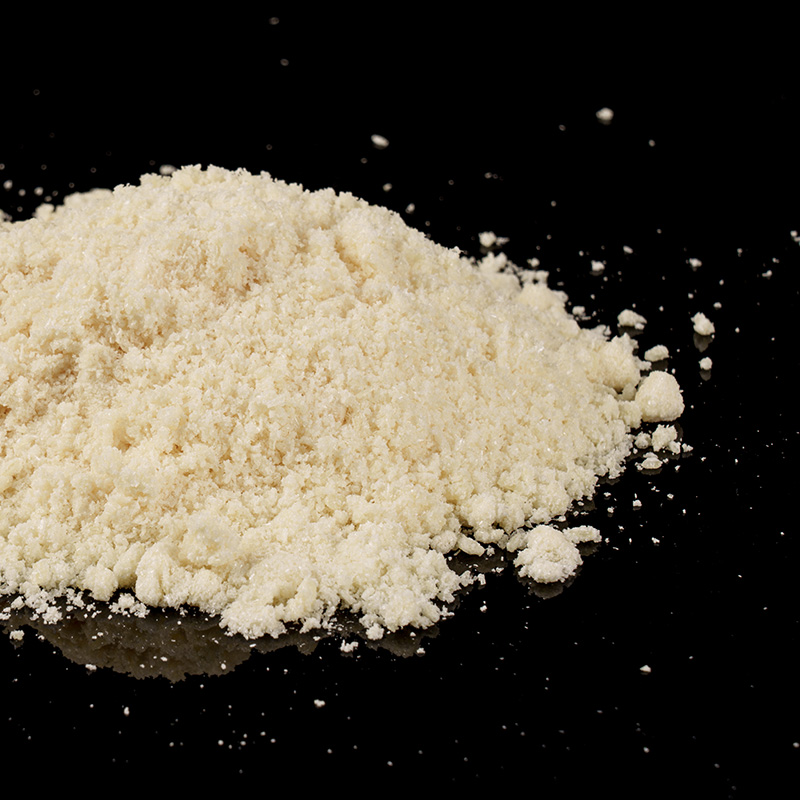
A working guide for formulators, polymer chemists and procurement teams — what HMF is, how it behaves on the shelf, which specifications matter, and where it leads downstream.
A formulator orders 200 kg of hydroxymethylfurfural in November. It arrives as a pale amber liquid, passes incoming inspection, and goes into a heated warehouse. Three weeks later the colour has deepened, the assay has drifted, and the batch no longer behaves the way the lab sample did. Nothing on the certificate of analysis was inaccurate: the document described the material on the day it left the plant, not the material after three weeks at 35 °C.
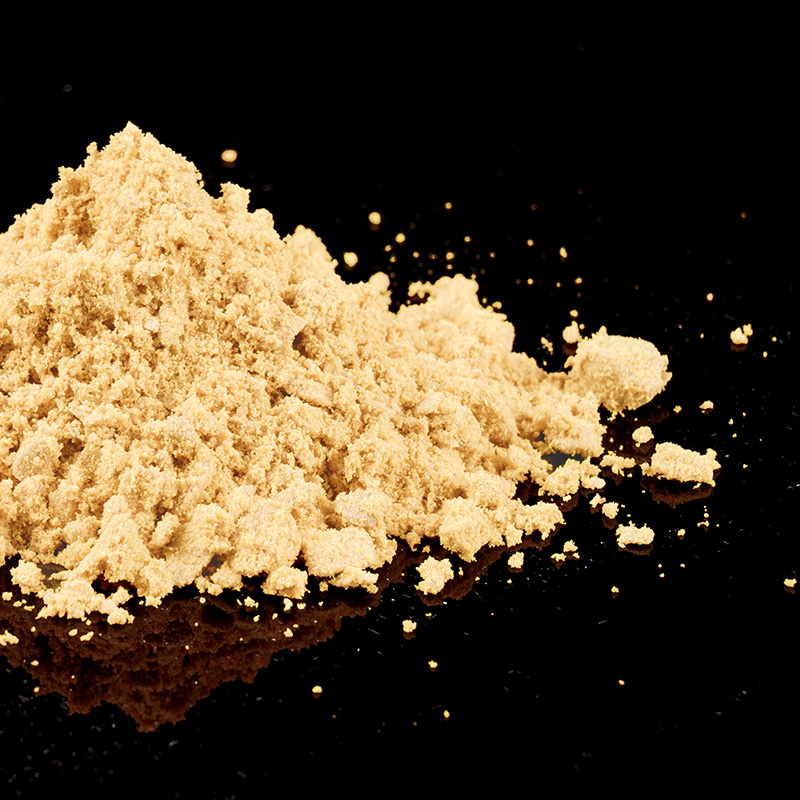
Hydroxymethylfurfural — HMF, C6H6O3, CAS 67-47-0, molecular weight 126.11 g/mol — is a six-carbon furan carrying an aldehyde at the 2-position and a hydroxymethyl group at the 5-position. Those two handles make it one of the most versatile bio-based platform molecules available. The same reactivity makes it one of the more demanding intermediates to specify, store and ship.
HMF reacts in two directions at once, and the aromatic furan ring sitting between the two functional groups is rigid. That combination turns the molecule into a branching point rather than a dead end.
The commercial consequence is simple: one feedstock, several product families. The technical consequence is equally simple — every one of those routes is sensitive to the same three variables, which are temperature, water and acid.
Purity tells you what is inside the drum. Water content, acidity and colour tell you what the drum will do three weeks from now.
Purity alone is a weak specification. Two drums both labelled 98% can behave very differently in the same reactor if their water content, acidity or oligomer load differ. A certificate worth relying on pins down at least five numbers: assay by HPLC or GC, water by Karl Fischer, colour on the Gardner or APHA scale, residual acidity, and non-volatile residue.
| Parameter | Typical reference | Why it matters |
|---|---|---|
| Molecular formula | C6H6O3, MW 126.11 | Sets the stoichiometry for every downstream calculation |
| Assay | 95% to 99% by HPLC or GC | Drives yield and the by-product load entering the reactor |
| Water content | Low single-digit percentage or below | Water accelerates ring-opening and colour formation when warm |
| Colour | Gardner or APHA scale | An early signal of thermal history and acid exposure |
| Storage condition | Cool, dark, dry, ideally under nitrogen | Slows aldehyde oxidation and self-condensation |
Beyond the certificate, four procurement questions separate a workable supplier from an expensive experiment:
Volume is the tell. A supplier able to prepare five tons of HMF for a single shipment is running a production line rather than a laboratory bench, and that difference shows up in how closely the second and third orders match the first. Zhejiang Sugar Energy Technology manufactures HMF and its furan intermediates from starch, cellulose and sucrose feedstocks, which is why the specification conversation usually starts with the downstream route rather than with a purity number.
The flagship grade ships as 5-hydroxymethylfurfural in drum and bulk quantities, with limits agreed against the customer's process.
Search for hydroxymethylfurfural outside a chemistry context and the results are mostly food science. HMF forms naturally when sugars are heated or stored for long periods. It is a standard marker of the Maillard reaction and of caramelisation, and it shows up in honey, fruit juices, dried fruit, coffee, malt and baked goods.
That literature is useful, but it answers a different question. Food analysts measure HMF in the parts-per-million range as an indicator of overheating or ageing. Industrial buyers purchase it at 95% or higher as a chemical feedstock. Limits written for beverages and honey have no bearing on how much HMF enters a polyester reactor — although they explain why a search for the compound surfaces toxicology pages before it surfaces suppliers.
Where the two worlds overlap is handling discipline. HMF is heat-sensitive, light-sensitive and prone to taking up moisture, which is why food analysts and polymer chemists end up offering the same advice: keep it cool, keep it dark, keep it sealed.
HMF is rarely the product a customer actually needs. It is the entry point to a family of furan intermediates, and each branch has its own customers, specifications and failure modes.
Oxidising both ends of the molecule gives 2,5-furandicarboxylic acid (FDCA), the most heavily studied HMF derivative. FDCA is a diacid, so it drops into polyester chemistry much the way terephthalic acid does. Its appeal is structural: the furan ring is stiff and less mobile than a benzene ring in certain packing arrangements, which generally translates into improved gas barrier behaviour in the finished polymer.
Reduction takes the molecule in a different direction. Selective hydrogenation of the aldehyde gives FDM, a diol. Full ring hydrogenation leads to the tetrahydrofuran series: THFDM as a saturated diol with a wide solubility range, THFDCA as the corresponding diacid, and BAMTHF as a diamine used as a precursor in pharmaceutical and specialty synthesis. Saturated rings trade some rigidity for stability, which suits applications where colour and oxidation resistance matter more than barrier performance.
Acid-catalysed self-condensation links two HMF units into OBMF, a difurfural used in resin and crosslinking chemistry. Further downstream, FDCA reacted with ethylene glycol produces poly(ethylene 2,5-furandicarboxylate), or PEF — a furan-based polyester frequently evaluated against PET for bottles, films and fibres, particularly where oxygen and carbon dioxide barrier performance drives the specification.
Most HMF quality complaints are not manufacturing defects. They are storage and transfer problems that a lower thermostat setting and a nitrogen line would have prevented.
Materials of construction matter as much as temperature. Stainless steel, glass-lined and PTFE-lined equipment are the safe default, and lines and pumps should be emptied between campaigns rather than left holding product for weeks.
Hydroxymethylfurfural is a platform molecule with an unusually wide reach: one furan ring, two reactive groups, and routes into polyesters, polyols, resins, amines and specialty intermediates. Its value is not in question. What decides whether a project succeeds is the unglamorous part — assay, water, colour, acidity and temperature control, tracked consistently from the supplier's certificate of analysis to the reactor inlet.
Buyers who treat HMF as a commodity with a fixed shelf life tend to be disappointed. Buyers who treat it as a reactive intermediate that needs a cold store, a nitrogen blanket and a re-test before use generally get the yields the literature promises.

Copyright© Zhejiang Sugar Energy Technology Co., Ltd. All Rights Reserved.
 Custom Biobased Polymer Manufacturers
 英语
 中文简体