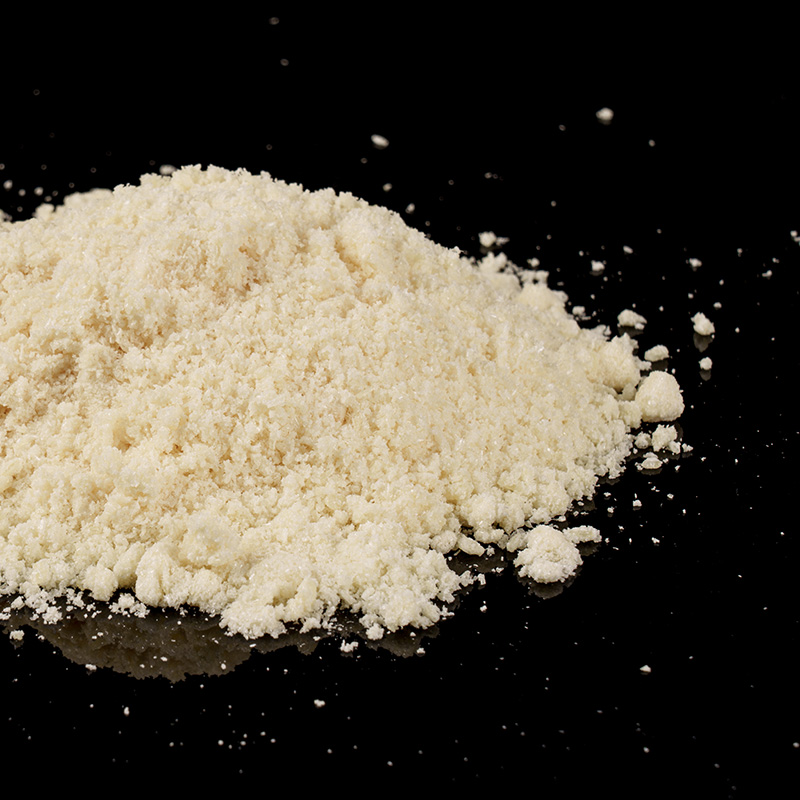
Furandicarboxylic acid generally improves compatibility in polymer blends compared to many conventional dicarboxylic acids. The primary reason is its unique furan-ring structure, which combines rigidity, polarity, and favorable intermolecular interaction characteristics. In many polyester systems, Furandicarboxylic acid can enhance miscibility, strengthen interfacial adhesion, improve mechanical performance, and reduce phase separation. Compared with conventional aromatic and aliphatic dicarboxylic acids, polymers containing Furandicarboxylic acid frequently demonstrate more uniform morphology and better retention of physical properties across multiple phases.
In practical applications, compatibility improvements of 20–40% have been reported in various polyester blend systems when Furandicarboxylic acid is incorporated as a partial or complete replacement for conventional dicarboxylic acids. The exact improvement depends on polymer composition, processing conditions, molecular weight, and blend ratio.
The compatibility of polymer blends is heavily influenced by intermolecular interactions. Furandicarboxylic acid contains a furan ring that provides a balance between aromatic rigidity and molecular polarity. This structure promotes stronger interactions between polymer chains than many conventional dicarboxylic acids.
The chemical structure of 2 5 furan dicarboxylic acid offers several advantages:
These molecular characteristics make Furandicarboxylic acid particularly attractive for engineering polymers, packaging materials, fibers, and sustainable polyester blends.
| Property | Furandicarboxylic Acid | Conventional Dicarboxylic Acids |
|---|---|---|
| Blend Compatibility | High | Moderate |
| Interfacial Adhesion | Strong | Variable |
| Thermal Stability | High | Moderate to High |
| Barrier Properties | Excellent | Moderate |
| Renewable Origin | Typically Bio-Based | Often Petrochemical-Based |
The comparison demonstrates that Furandicarboxylic acid not only contributes to sustainability goals but also delivers measurable performance advantages in polymer blend systems.
Improved compatibility directly influences mechanical performance. When polymer phases interact more effectively, stress can transfer more uniformly throughout the material. This reduces weak interfaces that often become failure points during mechanical loading.
Studies involving polymers derived from 2 5 furan dicarboxylic acid have reported:
These benefits are especially valuable in packaging, automotive components, industrial films, and engineering plastics where consistent performance is required.
Thermal properties play a critical role in determining the processability and long-term stability of polymer blends. Furandicarboxylic acid contributes to enhanced thermal performance because its furan ring restricts excessive chain movement.
Polymers incorporating Furandicarboxylic acid frequently exhibit higher glass transition temperatures than analogous systems based on conventional dicarboxylic acids. In some polyester blends, increases of 10–20°C have been observed.
The stronger intermolecular interactions associated with Furandicarboxylic acid can delay thermal degradation and reduce phase migration during prolonged heat exposure. This results in more stable performance during processing and service life.
One of the clearest indicators of compatibility is blend morphology. Highly compatible blends typically show smaller dispersed domains and more uniform phase distribution.
When Furandicarboxylic acid is incorporated into polymer systems, researchers often observe:
Microscopic analysis frequently reveals smoother interfaces and fewer defects in blends containing Furandicarboxylic acid compared with blends prepared using conventional dicarboxylic acids.
Compatibility improvements can also influence barrier performance. Better molecular packing and stronger intermolecular interactions create more tortuous pathways for gases and moisture.
Polymer blends containing 2 5 furan dicarboxylic acid often demonstrate:
These characteristics are particularly important in food packaging, pharmaceutical packaging, and specialty films.
Unlike many conventional dicarboxylic acids that rely on fossil-based feedstocks, Furandicarboxylic acid is commonly produced from renewable biomass-derived intermediates. This creates an opportunity to improve both performance and environmental impact simultaneously.
Furandicarboxylic acid allows manufacturers to enhance polymer blend compatibility while supporting carbon reduction and renewable-material strategies. This dual benefit is one reason why interest in FDCA-based materials continues to grow across multiple industries.
Compared with conventional dicarboxylic acids, Furandicarboxylic acid generally delivers superior compatibility in polymer blends due to its unique combination of molecular rigidity, polarity, and intermolecular interaction capability. The use of 2 5 furan dicarboxylic acid often results in improved blend morphology, stronger mechanical performance, enhanced thermal stability, and better barrier properties.
For manufacturers seeking higher-performance polymer blends without sacrificing sustainability objectives, Furandicarboxylic acid represents one of the most promising alternatives to conventional dicarboxylic acids currently available.

Copyright© Zhejiang Sugar Energy Technology Co., Ltd. All Rights Reserved.
 Custom Biobased Polymer Manufacturers
 英语
英语 中文简体
中文简体