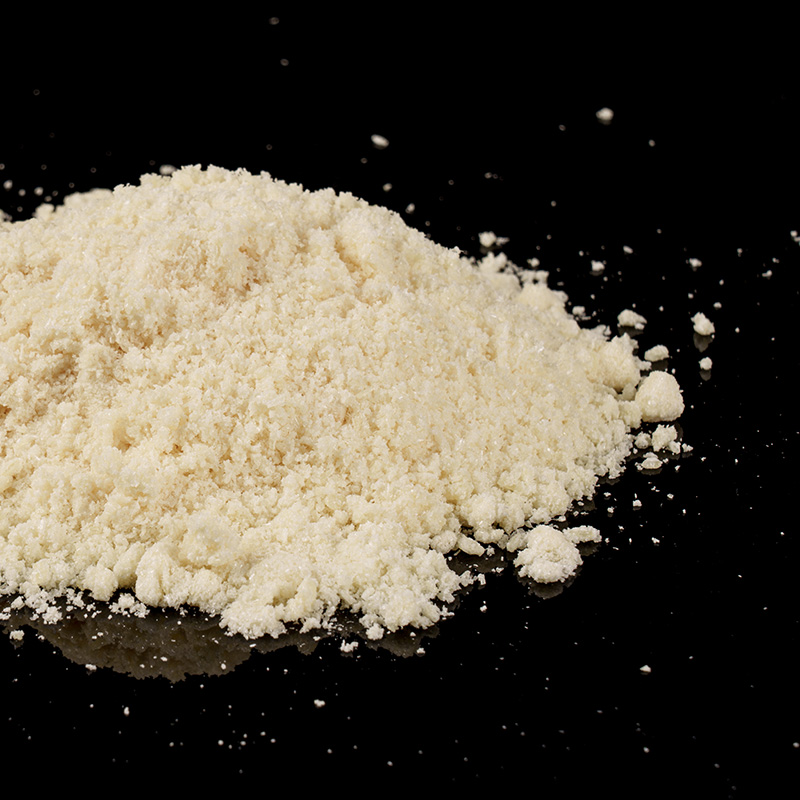
A specification sheet for 5-hydroxymethylfurfural (HMF) can look deceptively simple: one CAS number, one purity value, a melting point range. What it does not show is where the molecule sits in the bio-based value chain. HMF is one of the few molecules that connect natural sugar feedstocks directly with high-performance polymer chemistry, and it is that bridging role that makes it worth serious evaluation.
HMF is formed by the triple dehydration of hexoses such as fructose and glucose. Its molecular formula is C6H6O3 with a molecular weight of 126.11. Structurally, it combines a furan ring with two functional groups: an aldehyde (-CHO) and a hydroxymethyl group (-CH2OH). Having both groups on the same ring means HMF can undergo oxidation, hydrogenation, esterification, amination, and polymerization, which is why it is described as a platform molecule rather than a simple intermediate.
Upstream, HMF can be obtained from starch, cellulose, sucrose, agar, and other biomass sources through acid-catalyzed conversion. Downstream, it leads to 2,5-furandicarboxylic acid (FDCA), 2,5-furandiyldimethanol (FDM), 2,5-tetrahydrofuran dimethanol (THFDM), 2,5-bis(aminomethyl)tetrahydrofuran (BAMTHF), and the polyester poly(ethylene 2,5-furandicarboxylate) (PEF). The practical implication is simple: when you evaluate HMF, you are not just buying a fine chemical; you are choosing the entry point for an entire family of bio-based derivatives.
The IUPAC name of the compound is 5-(hydroxymethyl)furfural, sometimes written as 5-(hydroxymethyl)-2-furaldehyde. The commercial name "5-HMF" commonly appears in catalogue data and product labels.
Pure HMF is a yellow, low-melting solid near room temperature, usually melting in the range of 30-35 °C depending on purity. It is highly water-soluble and also dissolves in ethanol, acetone, and DMSO. These properties matter for handling: solid HMF can be weighed and transferred easily, but because it absorbs moisture from air, an opened container left unprotected will show increasing water content, darker color, and eventually higher impurity levels.
HMF is not a compound you can store for years and forget about. The aldehyde group is reactive, and under acidic, alkaline, or prolonged high-temperature conditions HMF degrades to levulinic acid, formic acid, or insoluble polymeric by-products. For industrial users, the operational rule is to keep it cool, dry, and protected from light, and to plan the supply chain so that material is consumed within a defined window rather than held in a warehouse for months.
| Purity grade | Typical applications | Points to check |
|---|---|---|
| 90-95% | Resin modification, additive intermediates, feed applications | Verify that side products do not interfere with the end formulation |
| 97-98% | Polymer synthesis, catalyst screening, derivative production | Confirm water content and acid value before use |
| ≥99% | Analytical standards, high-precision synthesis, sensitive applications | Demand detailed COA and documented GC/HPLC methods |
The core reaction for HMF production is acid-catalyzed dehydration of hexoses. Fructose reacts most readily, while glucose gives lower yields under the same conditions. Catalysts can be homogeneous acids such as sulfuric acid or heterogeneous solid acids such as sulfonic resins, zeolites, and metal oxides. Reaction media range from pure water to biphasic systems with organic solvents and to ionic liquids.
If the reaction looks straightforward on paper, the industrial challenge is selectivity. Once HMF is formed, it can easily rehydrate to levulinic acid and formic acid at high temperature, or condense with sugar intermediates to form insoluble humins. Successful production therefore depends on balancing conversion against degradation. In practice, four parameters matter most:
Companies that offer HMF at tonnage scale tend to differ significantly from those working at kilogram scale, not only in cost but also in batch-to-batch consistency. At Zhejiang Sugar Energy Technology Co., Ltd., our industrial-grade 5-hydroxymethylfurfural (HMF) is produced on a thousand-ton line that has been running in stable operation with the first commercial order already delivered. For a buyer, that kind of track record matters because it reduces the risk of supply interruption and quality drift.
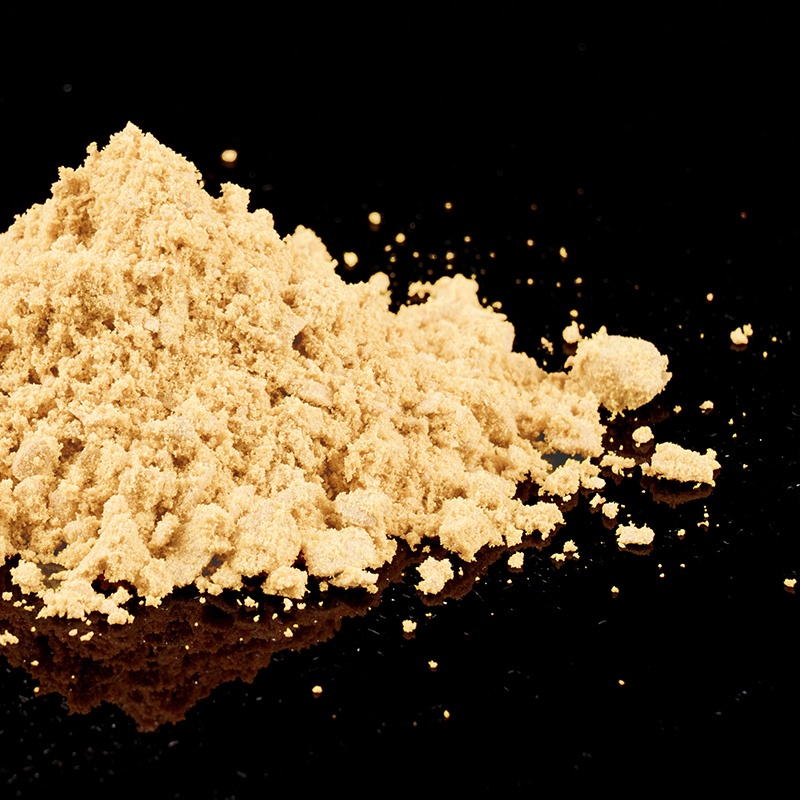 Wholesale 5- Hydroxymethylfurfural (HMF) Manufacturers, SuppliersZhejiang Sugar Energy Technology Co., Ltd. is professional China 5- Hydroxymethylfurfural (HMF) manufacturers and suppliers, we offer Who...View Product →
If you want to see how a tonnage HMF operation is run, the thousand-ton HMF production line news gives a clear look at the delivery status and the scale of the facility.
Two batches that both carry "98%" on the label can perform very differently in a downstream reaction, because the label says nothing about which impurities are present. The practical list of quality indicators is short but critical:
A reliable supplier should provide a certificate of analysis for each batch listing the analytical method, typically GC or HPLC, and the actual values for these impurities, not just the main assay. If the supplier cannot explain why the color changes between batches, it is reasonable to expect similar unpredictability in the material itself.
The commercial value of HMF lies less in the molecule itself and more in the derivatives it can be converted into. Three transformation families cover most of the volume:
The hydroxymethyl and aldehyde groups of HMF can both be oxidized to carboxylic acids, producing 2,5-furandicarboxylic acid (FDCA). FDCA is often described as the bio-based counterpart of terephthalic acid. It is the key monomer for PEF polyester. At Zhejiang Sugar Energy, the 2,5-furandicarboxylic acid (FDCA) line has completed verification at the 100-ton level, meaning the material is moving beyond pilot scale into reproducible production.
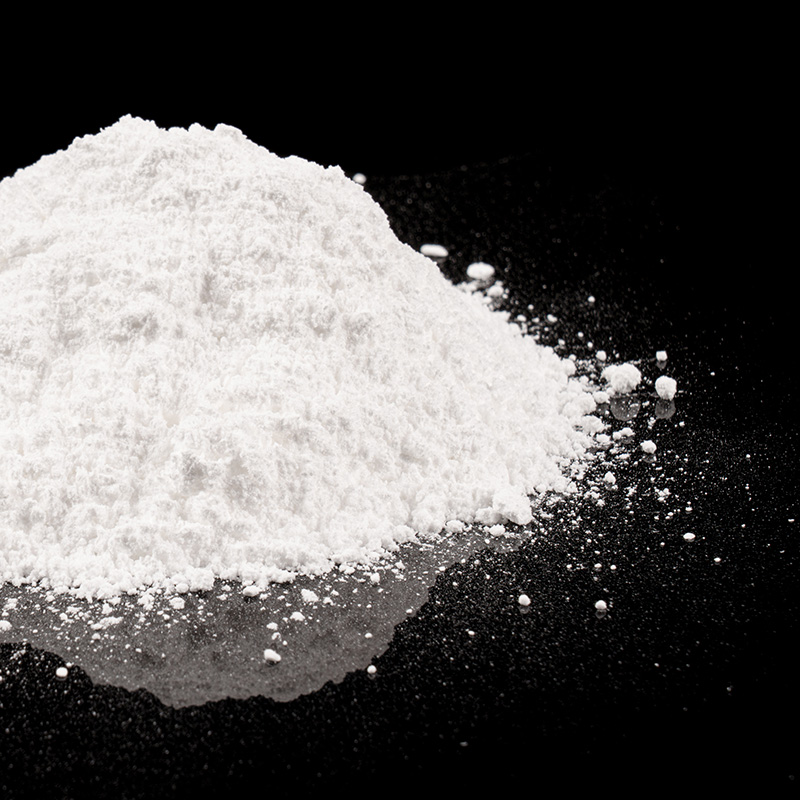 Custom 2, 5- Furandicarboxylic Acid (FDCA) Manufacturers, SuppliersSugar Energy Technology is China 2, 5- furandicarboxylic acid (FDCA) manufacturers and suppliers, we custom 2, 5- furandicarboxylic acid ...View Product →
Hydrogenation of HMF gives 2,5-furandiyldimethanol (FDM), and further hydrogenation saturates the furan ring to give 2,5-tetrahydrofuran dimethanol (THFDM). Both are diols that can participate in polyurethane, unsaturated polyester, and epoxy formulations. The two products differ in ring saturation, which changes their rigidity, thermal behavior, and compatibility with other monomers.
Reductive amination of HMF leads to 2,5-bis(aminomethyl)tetrahydrofuran (BAMTHF), a diamine with primary amine groups. Diamines of this kind are relevant for epoxy curing agents, polyamide and polyimide synthesis, and other amine-based chemistries where a bio-based backbone is desirable.
At the polymer level, FDCA can replace terephthalic acid in the polymerization with ethylene glycol to yield poly(ethylene 2,5-furandicarboxylate), or PEF. Gas barrier performance and thermal properties of PEF have repeatedly been highlighted in packaging research, making it one of the most visible end products of the HMF value chain. Our poly(ethylene 2,5-furandicarboxylate) (PEF) product is the direct result of that FDCA polymerization route.
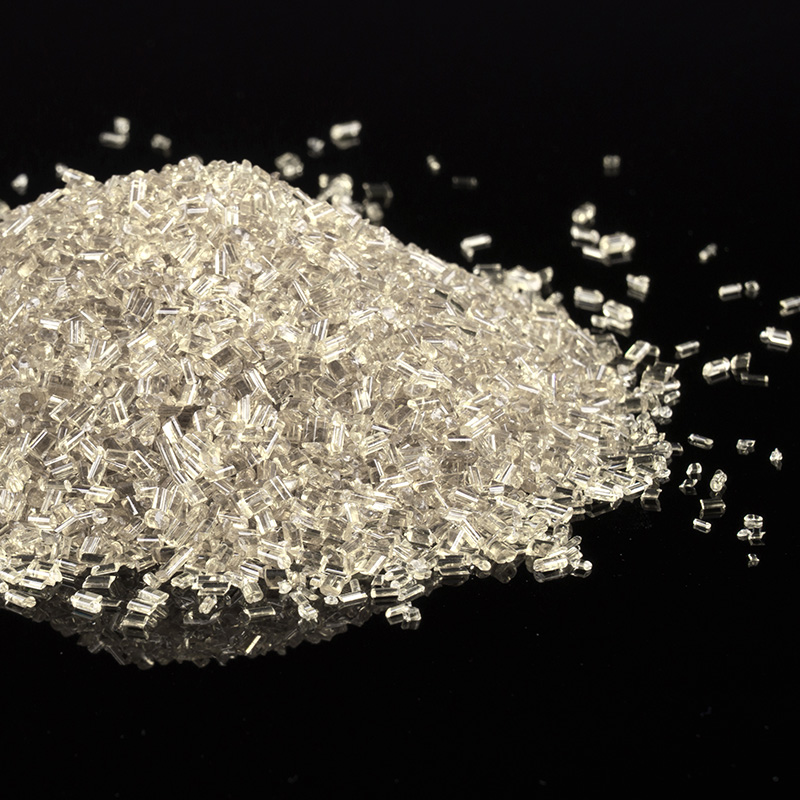 Poly (Ethylene 2,5-Furandicarboxylate) (PEF) Manufacturers, SuppliersAs China Poly (ethylene 2,5-furandicarboxylate) (PEF) manufacturers and suppliers, Zhejiang Sugar Energy Technology Co., Ltd. offer Whole...View Product →
| Derivative | Functional groups | Application direction |
|---|---|---|
| FDCA | Carboxylic acid | Polyesters, plasticizers, polyamides |
| FDME | Ester | Purified polymerization intermediate |
| FDM | Primary alcohol | Polyurethane, epoxy, resin modification |
| THFDM | Primary alcohol, saturated ring | Coatings, polyurethane |
| BAMTHF | Primary amine | Epoxy curing, polyamide synthesis |
| OBMF | Aldehyde, ether bridge | Specialty aldehydes and chemical synthesis |
Searches for HMF often surface food science literature first, because HMF appears in coffee, honey, fruit juices, vinegar, and other heat-processed foods. It forms there through the Maillard reaction and acid-catalyzed dehydration of reducing sugars during thermal processing and storage. Those studies discuss HMF as a heat marker and occasionally as a toxicological concern. The industrial-grade HMF used as a chemical intermediate is a different category altogether.
Industrial HMF is manufactured to defined purity and impurity specifications, typically documented by COA with GC or HPLC analysis. It is not a food ingredient, not an extract, and not directly comparable to the trace HMF that forms naturally in food. Unless a product has been specifically refined and approved for a regulated use, the food-safety literature should not be used to evaluate it. When sourcing HMF for chemical applications, the relevant specification is the product COA and the application-specific requirements of your own process, not the toxicity discussion in food research.
Price is easy to compare; supply reliability is harder. The following questions will give you a much clearer picture than any certificate alone:
Zhejiang Sugar Energy Technology Co., Ltd. was founded in 2017 and is recognized as a national high-tech enterprise, with the Ningbo Institute of Materials Technology and Engineering, Chinese Academy of Sciences, participating in its establishment. The company has built a furan-based product system around HMF that extends to FDCA, PEF, FDME, FDM, THFDM, BAMTHF, THFDCA, and OBMF. For a complete view of what is available, the complete furan-based product range page lists all current catalog items.
If you are evaluating HMF for a specific application, the relevant starting point is the Zhejiang Sugar Energy company overview, which explains the company’s position in the bio-based materials chain and the direction of its product development.

Copyright© Zhejiang Sugar Energy Technology Co., Ltd. All Rights Reserved.
 Custom Biobased Polymer Manufacturers
 英语
英语 中文简体
中文简体