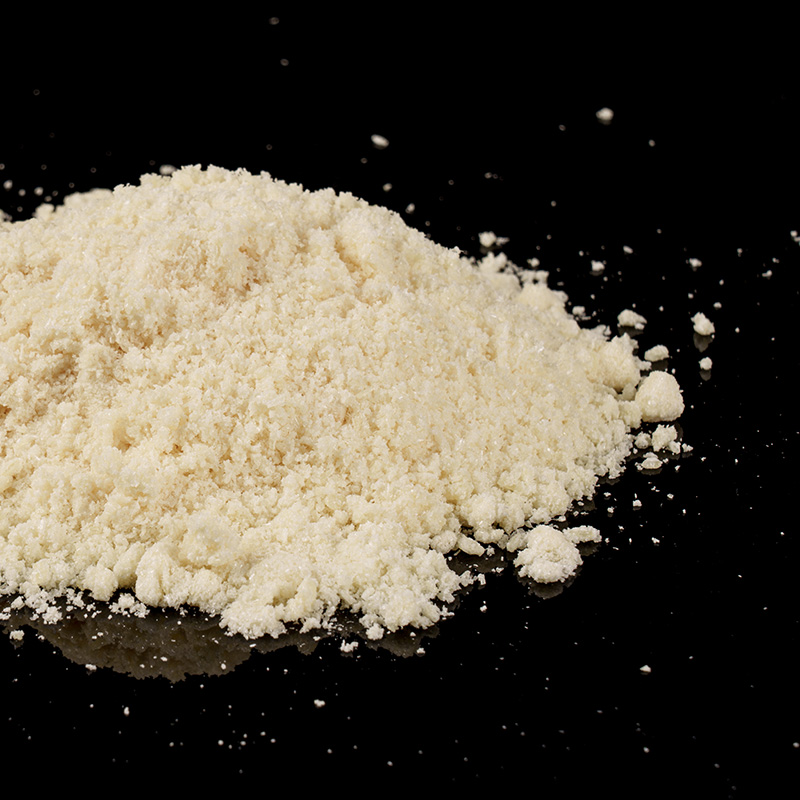
When comparing thermal degradation temperatures, Furandicarboxylic acid (FDCA)-based polymers — particularly PEF (polyethylene furanoate) — begin significant thermal degradation at approximately 350–370°C, while standard PET (polyethylene terephthalate) degrades at around 400–430°C under similar testing conditions. This means PET holds a thermal stability advantage of roughly 30–60°C over PEF in terms of degradation onset. However, FDCA-based polymers compensate with superior gas barrier properties, UV resistance, and a fully bio-based origin — making thermal behavior just one dimension of a broader performance comparison. Understanding where and how each material degrades is critical for processors, packaging engineers, and material scientists choosing between these two polymers.
Thermal degradation refers to the irreversible breakdown of a polymer's molecular backbone when exposed to elevated temperatures. This is distinct from the glass transition temperature (Tg) or melting point (Tm) — both of which describe physical state changes rather than chemical decomposition. For engineering and packaging polymers, the degradation temperature (Td) defines the upper processing boundary and long-term service ceiling.
For a bio-based polymer like PEF derived from Furandicarboxylic acid, evaluating Td is especially important because the furan ring in its backbone introduces different bonding characteristics compared to PET's benzene ring. The aromatic furan structure is slightly less thermally robust than benzene, which explains the lower Td observed in thermogravimetric analysis (TGA) studies.
The table below summarizes the core thermal properties of PEF and PET based on published TGA, DSC, and processing studies:
| Property | PEF (FDCA-based) | PET |
|---|---|---|
| Degradation Onset (Td) | ~350–370°C | ~400–430°C |
| Glass Transition Temp (Tg) | ~86–92°C | ~75–80°C |
| Melting Point (Tm) | ~210–215°C | ~250–265°C |
| Typical Processing Temp | ~240–260°C | ~270–290°C |
| Bio-based Content | 100% (fully bio-based) | 0% (petroleum-derived) |
A critical observation here is that while PEF has a lower Td and Tm than PET, it exhibits a notably higher Tg (~86–92°C vs ~75–80°C). This higher Tg means that PEF retains dimensional stability at higher service temperatures before softening — a practical advantage in hot-fill beverage applications, even if its degradation ceiling is lower.
The structural difference between Furandicarboxylic acid and terephthalic acid (TPA) is at the core of this thermal gap. TPA contains a benzene ring — a six-membered all-carbon aromatic structure with high bond dissociation energy and exceptional resonance stability. FDCA, by contrast, contains a furan ring — a five-membered ring with one oxygen heteroatom.
This oxygen atom in the furan ring slightly weakens the overall aromatic stabilization energy and introduces a lower bond dissociation threshold under thermal stress. As a result:
In practical terms, this structural difference means that melt processing of Furandicarboxylic acid-based polymers requires tighter temperature control to avoid premature degradation during extrusion or injection molding.
The lower Td of Furandicarboxylic acid-based PEF creates both challenges and advantages during industrial processing:
PEF is typically processed between 240°C and 260°C. Given that its degradation onset begins around 350°C, there is approximately a 90–110°C processing safety margin. PET, processed at 270–290°C with a Td of 400–430°C, has a similar or slightly wider margin (~130°C). While both polymers are manageable, PEF processors must avoid localized hot spots in screws or dies, which could push material above safe thresholds and cause discoloration or molecular weight loss.
Like PET, PEF is hygroscopic and requires thorough pre-drying before melt processing (typically to <50 ppm moisture). However, because the biobased polymer PEF has a lower Tm, it can be dried at lower temperatures (around 100–110°C vs 160–180°C for PET), which reduces energy consumption during preparation — a minor but meaningful operational benefit.
Thermal degradation of PEF at elevated temperatures can produce yellow discoloration due to furan-related chromophoric byproducts. This is a known challenge in producing water-clear bottle-grade PEF resin, and research into stabilizer packages — similar to those used for PET — is ongoing. Avantium, a leading commercial developer of Furandicarboxylic acid-based materials, has reported progress in controlling this colorimetric behavior in their Plantform™ PEF resin platform.
It would be misleading to evaluate Furandicarboxylic acid-based polymers on thermal degradation alone. In several performance categories relevant to the packaging industry, PEF demonstrates clear advantages over PET:
These properties position PEF not as a direct drop-in for PET, but as a premium, next-generation biobased polymer with a differentiated performance profile suited to applications where barrier, sustainability, and UV resistance outweigh the need for the highest possible thermal ceiling.
Understanding when the Td gap between Furandicarboxylic acid-based polymers and PET matters in real applications helps engineers make better material choices:
For the majority of packaging and consumer goods applications, PEF's slightly lower Td is not a practical limitation. The real competitive battleground lies in cost (PEF remains more expensive than PET at current production scales), recyclability infrastructure compatibility, and the speed of bio-based feedstock supply chain development.
Furandicarboxylic acid-based PEF degrades at 350–370°C — meaningfully lower than PET's 400–430°C threshold. This gap requires careful process temperature management but does not disqualify PEF from the vast majority of packaging, fiber, and film applications where service temperatures are well below either polymer's degradation point. Meanwhile, PEF's higher glass transition temperature, outstanding gas barrier performance, inherent UV protection, and status as a fully bio-based, biobased polymer make it one of the most compelling next-generation materials in sustainable polymer development. As production scales and costs decline — particularly through advances in HMF oxidation processes — Furandicarboxylic acid-based polymers are poised to capture significant market share from conventional PET in applications where performance and sustainability converge.

Copyright© Zhejiang Sugar Energy Technology Co., Ltd. All Rights Reserved.
 Custom Biobased Polymer Manufacturers
 英语
英语 中文简体
中文简体