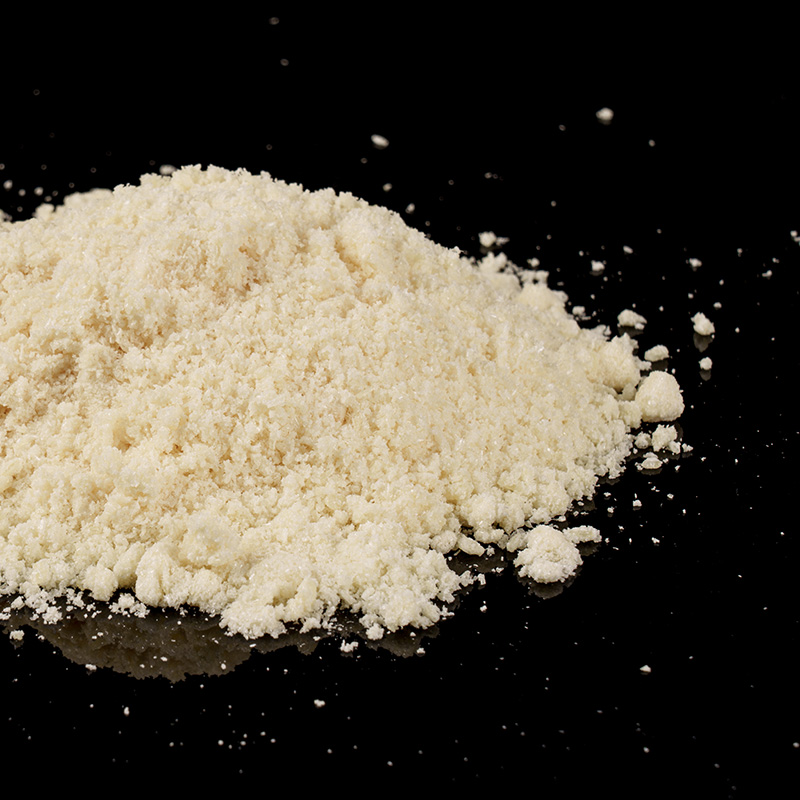
When comparing 5-Hydroxymethylfurfural (HMF) and 2,5-Dimethylfuran (DMF) as biofuel precursors, DMF holds a clear advantage in energy density, while hydroxymethylfurfural HMF offers broader chemical versatility as a platform intermediate. DMF, produced by the hydrogenolysis of HMF, achieves an energy density of approximately 31.5 MJ/L, closely approaching that of gasoline (34.2 MJ/L), whereas HMF itself is not directly used as a combustion fuel. However, in terms of production yield, 5 hydroxymethylfurfural HMF can be synthesized from fructose at yields exceeding 90 mol% under optimized conditions, while the subsequent conversion of HMF to DMF introduces yield losses, typically achieving 50–70% overall yield from biomass feedstock to final DMF product. Understanding this tradeoff is essential for selecting the right strategy in a biomass-to-fuel or biomass-to-chemical pipeline.
5-Hydroxymethylfurfural (HMF) is a furan-based organic compound derived from the acid-catalyzed dehydration of hexose sugars, most commonly fructose or glucose. It is widely recognized as one of the most promising bio-based platform chemicals due to its bifunctional structure — carrying both an aldehyde and a hydroxymethyl group — which makes it highly reactive for further chemical transformations.
2,5-Dimethylfuran (DMF), on the other hand, is a downstream derivative of hydroxymethylfurfural HMF. It is produced through catalytic hydrogenolysis of HMF, where both functional groups are reduced and deoxygenated. DMF is a liquid fuel candidate, praised for its high energy content and low water solubility — a key advantage over ethanol.
In essence, 5 hydroxymethylfurfural HMF is the feedstock, and DMF is the fuel-grade output. Their comparison as biofuel precursors therefore involves evaluating both the direct properties of HMF as an intermediate and the total process efficiency when HMF is converted to DMF.
Energy density is one of the most critical parameters for any fuel candidate. The following table summarizes the volumetric energy densities of HMF, DMF, and common reference fuels:
| Compound | Volumetric Energy Density (MJ/L) | Boiling Point (°C) | Water Miscibility |
|---|---|---|---|
| 5-Hydroxymethylfurfural (HMF) | ~22–24 (estimated) | 114–116 (at 1 mmHg) | High |
| 2,5-Dimethylfuran (DMF) | 31.5 | 92–94 | Low |
| Ethanol | 23.5 | 78 | Full |
| Gasoline | 34.2 | 40–205 | None |
As illustrated, DMF's volumetric energy density of 31.5 MJ/L is approximately 40% higher than ethanol and significantly superior to HMF in its raw form. HMF's high water solubility and solid/semi-solid state at room temperature make it unsuitable as a direct combustion fuel, further confirming DMF's edge for direct fuel use.
However, it must be stressed that HMF is the indispensable upstream precursor. Without efficient HMF production, DMF synthesis cannot proceed at industrial scale. From this systems perspective, maximizing the production yield of hydroxymethylfurfural HMF is foundational to the entire DMF biofuel pathway.
Production yield is where 5-Hydroxymethylfurfural (HMF) demonstrates its greatest strength. Under optimized reaction conditions — typically using fructose as the feedstock, a solid acid catalyst such as Amberlyst-15 or sulfonic acid-functionalized silica, and a biphasic solvent system like water/methyl isobutyl ketone (MIBK) — HMF yields can reach 90–95 mol%.
Glucose, a cheaper and more abundant hexose sugar, can also be converted to 5 hydroxymethylfurfural HMF but requires an additional isomerization step (glucose → fructose), which reduces overall yield to roughly 50–70 mol%. Chromium-based catalysts (e.g., CrCl₃) or enzymatic isomerases are commonly applied at this stage.
Converting HMF to DMF requires a two-step hydrogenolysis reaction. Key findings from published research include:
Taking the full pathway into account — from fructose to hydroxymethylfurfural HMF (90% yield) and then HMF to DMF (70% yield) — the combined yield from sugar to DMF is approximately 63%. This compares favorably to cellulosic ethanol processes, which typically operate at 40–55% overall yield from lignocellulosic biomass to ethanol.
The synthesis of 5-Hydroxymethylfurfural (HMF) from fructose is relatively straightforward compared to DMF production. HMF synthesis operates under mild acid conditions (pH 1–3), temperatures of 80–150°C, and atmospheric or slightly elevated pressure. The primary process challenge is preventing HMF from undergoing self-condensation or rehydration into levulinic acid and formic acid, which are common side reactions in aqueous media.
In contrast, DMF production from 5 hydroxymethylfurfural HMF demands:
This added complexity translates directly into higher capital expenditure and operating costs for DMF production relative to stopping at the HMF stage. For applications where HMF itself is the desired product — such as polymer synthesis (FDCA/PEF pathway) or pharmaceutical intermediates — stopping at the hydroxymethylfurfural HMF stage is both more economical and more efficient.
From a practical handling perspective, both 5-Hydroxymethylfurfural (HMF) and DMF present distinct challenges:
5 hydroxymethylfurfural HMF is known to be thermally and chemically sensitive. It undergoes polymerization (forming humins) under prolonged heat exposure and degrades in aqueous acidic media over time. Recommended storage conditions include temperatures below 4°C under an inert atmosphere (nitrogen or argon), with amber glass containers to prevent photodegradation. Industrial-grade HMF typically has a shelf life of 12–18 months under proper conditions.
DMF is a more stable, volatile liquid with a boiling point of 92–94°C. It is flammable (flash point approximately 7°C) and has low water solubility (~2.3 g/L at 25°C), which is beneficial for fuel blending but introduces flammability hazards during transport and storage. DMF is also susceptible to ring-opening under strong acidic or oxidative conditions.
For large-scale logistics, DMF's low boiling point and high vapor pressure present infrastructure challenges comparable to handling light naphthas, whereas hydroxymethylfurfural HMF, despite its sensitivity, can be handled in dissolved form (e.g., in DMSO or water) with appropriate temperature controls.
The answer depends on the end application. Here is a direct breakdown:
Research published in journals such as ACS Sustainable Chemistry & Engineering and Green Chemistry consistently highlights the HMF-to-DMF pathway as one of the most atom-efficient routes in biomass valorization, achieving carbon efficiencies of up to 85% when optimized catalyst systems are deployed.
| Parameter | 5-Hydroxymethylfurfural (HMF) | 2,5-Dimethylfuran (DMF) |
|---|---|---|
| Role in biofuel chain | Upstream platform intermediate | End-stage fuel candidate |
| Energy density | ~22–24 MJ/L (not used directly) | 31.5 MJ/L |
| Max synthesis yield from fructose | 90–95 mol% | ~63% (combined pathway) |
| Production complexity | Moderate (acid catalysis) | High (high-pressure H₂, metal catalysts) |
| Chemical versatility | Very high (polymers, pharma, fuels) | Limited (primarily fuel use) |
| Water solubility | High (challenging for fuel) | Low (favorable for fuel) |
| Thermal stability | Moderate (prone to polymerization) | Good (stable at ambient conditions) |
5-Hydroxymethylfurfural (HMF) and DMF are not competing alternatives but complementary stages within the same biomass valorization pathway. HMF excels in production yield and chemical flexibility, while DMF leads in fuel-grade energy density and combustion compatibility. For researchers and process engineers, the strategic question is not which compound is "better," but rather where to stop in the conversion chain based on market demand, available infrastructure, and target application — whether that is a renewable fuel, a bio-based polymer, or a high-value specialty chemical.

Copyright© Zhejiang Sugar Energy Technology Co., Ltd. All Rights Reserved.
 Custom Biobased Polymer Manufacturers
 英语
英语 中文简体
中文简体