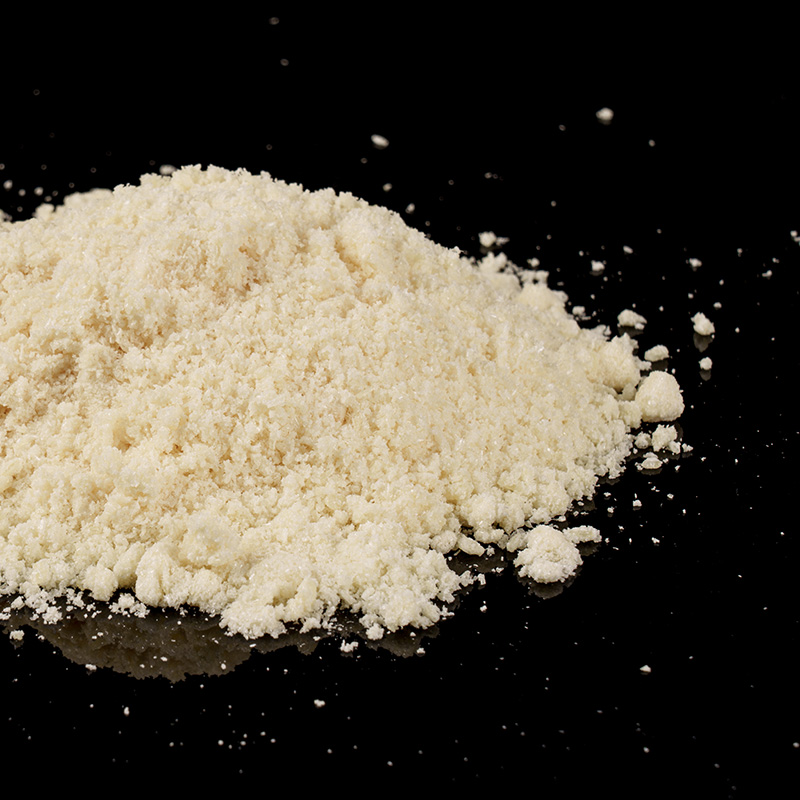
2,5-Furandicarboxylic Acid (FDCA) contains a rigid, planar furan ring that introduces stiffness into the polyester backbone. This structural rigidity reduces rotational freedom along the polymer chain, promoting more orderly chain alignment and efficient packing in the solid state. The result is an increase in the formation of crystalline regions within the polymer matrix. The degree of crystallinity is directly influenced by the regularity and symmetry of the polymer chains, and FDCA’s inherent rigidity favors such ordered arrangements. Improved chain packing enhances the mechanical properties of the resulting polyester, including tensile strength and dimensional stability, while also contributing to better barrier performance against gases and moisture. However, the rigidity can slightly limit chain mobility during processing, which must be managed to avoid slow or incomplete crystallization.
The presence of FDCA significantly affects crystallization behavior due to strong interchain interactions arising from the polar furan moieties and π-π stacking tendencies. These interactions encourage nucleation and growth of crystalline domains during cooling. The crystallization rate of FDCA-based polyesters, such as polyethylene furanoate (PEF), tends to be moderate to high depending on processing conditions and the presence of comonomers. The polymer’s thermal history, cooling rate, and FDCA content determine the size and perfection of crystalline regions. Optimal crystallization improves mechanical integrity, thermal resistance, and barrier properties, making FDCA-based polymers suitable for packaging, fiber, and film applications. However, overly fast cooling can result in incomplete crystallization, yielding partially amorphous materials with reduced performance.
FDCA contributes to a higher melting temperature (Tm) in bio-based polyesters compared to polyesters derived from more flexible aliphatic diacids. The rigid furan ring in FDCA increases the energy required to disrupt the crystalline lattice, resulting in enhanced thermal stability. For example, polyethylene furanoate (PEF) exhibits melting temperatures in the range of approximately 215–220°C, which can be tailored through polymer composition and copolymerization strategies. The elevated Tm improves the polymer’s resistance to thermal deformation, making FDCA-based materials suitable for high-temperature applications such as hot-fill beverage packaging and thermal molding processes. This thermal stability, coupled with high crystallinity, ensures that the polymer maintains mechanical integrity during both processing and end-use.
The overall crystallinity of FDCA-based polyesters depends on multiple factors, including FDCA content, copolymer ratio, polymerization method, and processing conditions. Higher FDCA incorporation generally increases chain rigidity and promotes crystalline domain formation, enhancing mechanical strength and barrier properties. The proportion of amorphous versus crystalline regions can be tuned to achieve specific material performance characteristics. Controlled cooling and precise monomer stoichiometry enable manufacturers to optimize crystallinity, achieving the desired balance between rigidity, flexibility, and thermal resistance. This tunability is a key advantage for applications requiring customized performance, from high-barrier packaging films to durable fibers.
The influence of FDCA on crystallinity and melting temperature has direct consequences for industrial application performance. Enhanced crystallinity improves dimensional stability, mechanical strength, and gas barrier properties, which are essential for food and beverage packaging, industrial films, and specialty fibers. The higher melting temperature ensures that FDCA-based polyesters can withstand thermal processing and hot-fill conditions without degradation. By carefully controlling polymer composition and processing parameters, manufacturers can tailor FDCA-based polymers to meet specific functional requirements, achieving optimal performance in terms of mechanical, thermal, and barrier properties for sustainable, high-performance bio-based materials.

Copyright© Zhejiang Sugar Energy Technology Co., Ltd. All Rights Reserved.
 Custom Biobased Polymer Manufacturers
 英语
英语 中文简体
中文简体