Material Intelligence — C4 Dicarboxylic Acids
Fumaric Acid vs Maleic Acid: Two Isomers, Two Personalities
They share the same molecular formula, yet one geometric detail alters melting point, solubility, acidity, and safety profile — and it should decide which one you buy.
Choosing between fumaric acid and maleic acid rarely begins with the molecular formula. Both are C4H4O4, both carry two carboxyl groups and one carbon–carbon double bond, and both can serve as monomers, acidulants, or synthetic intermediates. On a specification sheet, they look nearly interchangeable. In the reactor and in the finished material, they behave like different substances.
The conclusion up front: fumaric acid is the thermodynamically stable trans isomer; maleic acid is the metastable cis isomer. That single geometric difference governs crystal packing, thermal behaviour, solubility, acidity, and even food compatibility. Once you know which isomer you actually need, the rest of the technical evaluation becomes much simpler.
Both molecules are butenedioic acids. In maleic acid, the two carboxyl groups sit on the same side of the double bond (cis); in fumaric acid, they sit on opposite sides (trans). The cis arrangement crowds the two acid functions together, allowing one carboxyl hydrogen to form an intramolecular hydrogen bond with the neighbouring carboxyl group. The trans arrangement spaces the groups far apart, so fumaric acid instead forms intermolecular hydrogen bonds in a regular, tightly packed crystal lattice.
This difference does not stay in the textbook. The cis molecule is bulkier and less symmetric, which disrupts efficient packing in the solid state. Fumaric acid, being effectively linear, packs more densely and produces a higher-melting, far less soluble crystal. Nearly every measurable difference in the property table can be traced back to this geometry.
Once you see the cis–trans distinction, the property table stops being a list of disconnected numbers and becomes a chain of consequences.
The following table covers the properties that matter most when the two acids are evaluated as raw materials for resins, food systems, or synthesis.
| Property | Maleic acid (cis) | Fumaric acid (trans) |
|---|---|---|
| Molecular formula | C4H4O4 | C4H4O4 |
| Melting point | ≈ 130–135 °C | ≈ 287 °C (sealed tube); sublimes near 200 °C |
| Water solubility at 25 °C | ≈ 788 g/L | ≈ 6.3 g/L |
| pKa1 | ≈ 1.9 | ≈ 3.0 |
| pKa2 | ≈ 6.3 | ≈ 4.4 |
| Relative density | ≈ 1.59 | ≈ 1.64 |
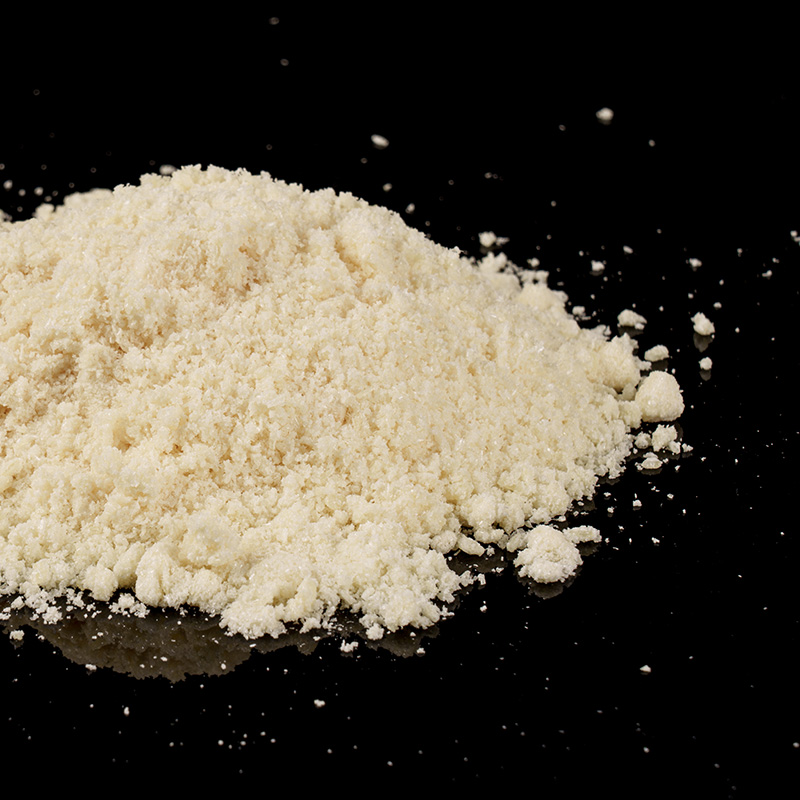
| Typical solid form | White crystals, hygroscopic | Free-flowing powder, low hygroscopicity |
If you assume the more stable isomer is also the stronger acid, you will be misled. Maleic acid has a first pKa near 1.9, while fumaric acid's first pKa is near 3.0. In practical terms, maleic acid is roughly ten times stronger in its first dissociation step.
The cause is the same cis geometry. When maleic acid loses its first proton, the remaining carboxyl hydrogen can form a strong intramolecular hydrogen bond with the newly generated carboxylate group. This internal bridge stabilises the hydrogen maleate anion so effectively that the first proton comes off far more easily. The same bridge then makes the second proton harder to remove: maleic acid's second pKa rises to about 6.3, while fumaric acid's second pKa remains at a conventional 4.4.
What this means in practice: maleic acid produces a rapid, sharp pH drop in water and suits processes that need fast acidification. Fumaric acid delivers a more moderate, sustained acidity that tastes cleaner and is well adapted to food, beverage, and feed systems where buffering and sensory profile matter.
Fumaric acid sits at the thermodynamic minimum. Maleic acid is the higher-energy cis form and can isomerise to fumaric acid under heat, ultraviolet light, radical conditions, or catalytic influence. Industrially, maleic anhydride is usually produced first by oxidation of n-butane or benzene, then hydrolysed to maleic acid, and then fully or partially isomerised to fumaric acid when the trans product is wanted.
For a buyer, this creates an easily underestimated risk. Maleic acid stored in warm, humid, or UV-exposed conditions can gradually isomerise, shifting its solubility and melting behaviour even while the drum label remains the same. Fumaric acid, in contrast, is dense, free-flowing, and only weakly hygroscopic, which makes it noticeably more forgiving in warehousing, milling, and dry blending.
When a sourcing or formulation team asks which acid to specify, the answer depends on the function, not on the formula. Walk through the intended application with these criteria:
The maleic–fumaric comparison is more than a chemistry exercise. It is a way of thinking that transfers beyond C4 dicarboxylic acids. The screening sequence stays the same:
The same criteria are now being applied to bio-based dicarboxylic acids. One of the most commercially advanced examples is 2,5-furandicarboxylic acid (FDCA), a renewable diacid obtained from biomass-derived 5-hydroxymethylfurfural (HMF) rather than from petroleum oxidation routes. FDCA's furan ring creates a different geometry from the linear C4 acids, but the questions for a formulator stay the same: What is its melting point? Is it soluble in the reaction medium? What are its dissociation constants? How does ring geometry influence chain packing in a polyester?
Manufacturers such as Zhejiang Sugar Energy Technology have moved FDCA from laboratory quantities to industrial verification. The completed FDCA 100-tonne line verification is a concrete sign that a bio-based diacid can now be sourced at meaningful scale, not just discussed in research papers.
Because FDCA is synthesised from HMF, the supply chain for furan-based diacids begins upstream with biomass conversion. Understanding where the precursor comes from — and whether the producer controls its own feedstock — is part of a responsible sourcing decision.
The cis–trans mindset still helps here, even though furan diacids do not show the classical cis/trans isomerism of butenedioic acids. Ring symmetry, conformational freedom, and hydrogen-bonding capacity create the same kinds of trade-offs in solubility, crystallinity, and ultimate polymer performance. The analytical habit — read the structure first, then talk price — is what separates a successful material substitution from an expensive trial.
If you normally sort acids by price per kilogram, this comparison is a reminder to add a second filter. Isomerism and geometry set the ceiling on what a molecule can do in your process. Fumaric acid and maleic acid prove it with the same four carbon atoms; the next generation of diacid candidates will be judged by the same rule.
Fumaric acid and maleic acid are an ideal lesson in material selection. Two molecules with identical atoms diverge so sharply that one is at home in food and feed, while the other is a workhorse of industrial polymer chemistry. The explanation is not exotic; it is geometry.
Use the same habit whenever you qualify an acid, whether fossil-based or bio-based: identify the isomer or ring structure, check the dissociation constants, compare melting point and solubility in your actual solvent, and then ask how the molecule packs into a crystal or a polymer chain. The difference between fumaric acid and maleic acid is not a trivia question. It is a practical decision framework that keeps working long after the purchase order is signed.

Copyright© Zhejiang Sugar Energy Technology Co., Ltd. All Rights Reserved.
 Custom Biobased Polymer Manufacturers
 英语
英语 中文简体
中文简体