Biobased Furan Chemistry
What HMF actually is, where it fails in practice, and how purity, water content, colour and storage decide whether your downstream chemistry works.
Two drums of 5-hydroxymethylfurfural can carry the same assay figure on the certificate of analysis and still behave like two different chemicals. One runs clean through an oxidation or hydrogenation step; the other darkens the reactor, drags down yield, and leaves the technical team blaming the catalyst. The difference is rarely the headline purity number. It is water content, colour bodies, trace acidity, and how the material was stored between the plant gate and your loading dock.
The practical conclusion comes first: HMF is a commercially available platform molecule, and most of its real-world problems are specification and logistics problems rather than chemistry problems. Specify it properly, store it properly, and it becomes one of the most versatile biobased building blocks on the market. Skip those steps and no amount of process optimisation will rescue the batch.
HMF is made by dehydrating six-carbon sugars: glucose and fructose, plus the sucrose and starch streams that break down into them. Its value sits in one small ring that carries three useful features at once, a hydroxymethyl group, an aldehyde group, and a rigid, planar, aromatic furan ring.
That combination is why a single molecule can feed so many product families:
Read that list again and the commercial logic becomes clear. The aldehyde and the hydroxymethyl group are the two handles, and the furan ring supplies the rigidity that makes the resulting polymers stiffer and more thermally interesting than their straight-chain biobased cousins.
HMF rarely fails in the reactor. It usually fails somewhere between the storage tank and the reactor.
Buying HMF on assay alone is the most common and most expensive mistake in this market. A 98% figure tells you what fraction of the drum is HMF; it says nothing about what the remaining two percent is doing to your reaction. In practice, three parameters explain most batch-to-batch variation: water content, colour, and the trace residues that travel with them.
Ask for batch-level documentation that states the analytical method, not just a number. Gas chromatography and high-performance liquid chromatography can return different values on the same drum, so the method matters as much as the result.
| Parameter | What to request | Why it matters downstream |
|---|---|---|
| Assay (GC or HPLC) | 98% or higher, with the method stated | The remaining percentage is not inert filler; it is water, solvent or dimerised material competing in your reaction. |
| Water content (Karl Fischer) | A clear upper limit, commonly below 0.5% | Water accelerates degradation, shifts equilibria and can poison moisture-sensitive catalysts. |
| Colour (APHA or visual scale) | Pale amber or lighter, tracked batch over batch | Darkening signals thermal exposure and pre-formed humin that carries straight into your finished product. |
| Trace acidity | Controlled and reported as pH of an aqueous extract | Acid residues catalyse unwanted side reactions during storage and heating. |
| Residual solvent | Declared, together with the manufacturing route | Solvent carryover changes solubility and can deactivate hydrogenation catalysts. |
| Packaging and storage | Sealed, moisture-barrier containers, kept cool and dark | Specification at delivery is not specification at use; handling decides the last mile. |
If you are qualifying an HMF grade for the first time, it helps to understand how production route, structure and purity interact. The notes on HMF structure, production and industrial sourcing walk through that relationship in more detail.
Info
A certificate of analysis describes the material on the day it was tested. It does not describe the material after three weeks in a warm warehouse. Request stability data under realistic storage conditions before you set incoming-goods limits.
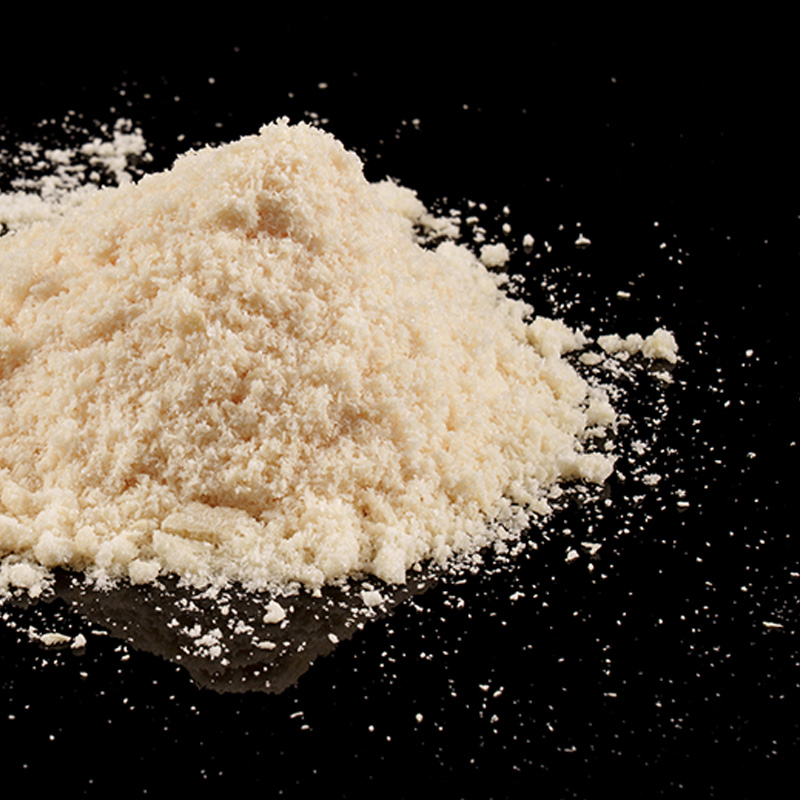
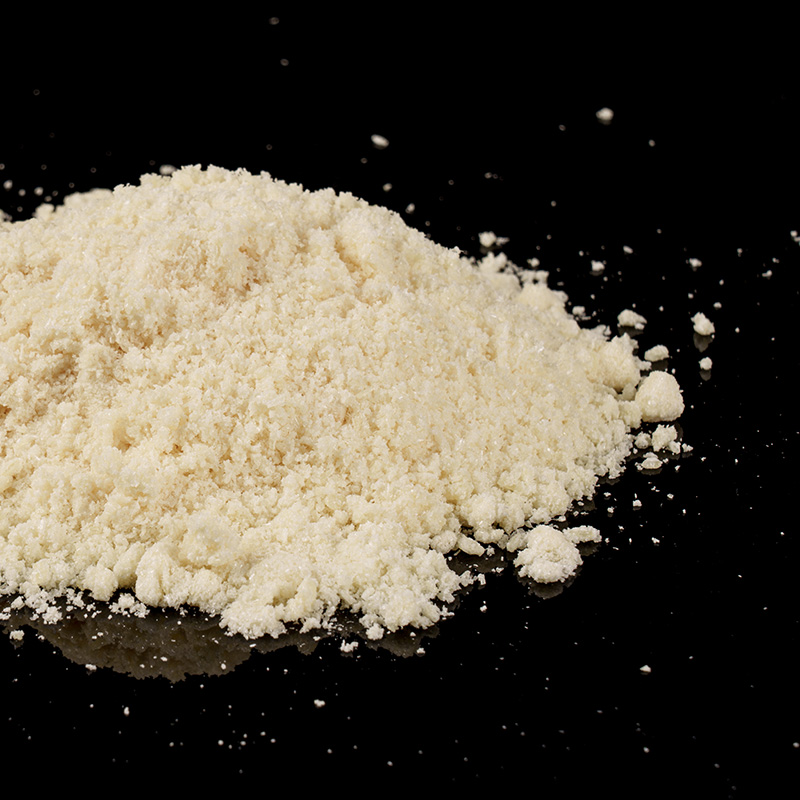
HMF is usually supplied as a low-melting solid or a viscous liquid depending on ambient temperature, and it responds to three conditions in a predictable order: heat first, moisture second, light third. Warm storage accelerates self-condensation and oligomer formation. Moisture ingress adds hydrolysis products and shifts reaction equilibria. Light exposure darkens the material even when the assay holds flat.
Colour drift is the symptom teams notice first, because it is visible. A batch that arrives pale straw and turns amber after a month has not merely changed appearance; the same conditions that generate colour bodies also consume the reactive groups you paid for.
Warning
Treat HMF as a cold-chain-adjacent material. Keep containers sealed, cool and dark, limit headspace, and avoid long open-air decanting. A drum that passes incoming inspection can still fail in production if it sits warm for a week.
There is a second reason to take HMF seriously as a quality marker. In food systems it forms through the Maillard reaction and caramelisation, which is why it is used as an indicator of excessive heat treatment in honey, juices and dairy. The chemistry is identical to what happens in an overheated drum; only the intent differs.
HMF is rarely the product a customer actually needs. It is the gateway. The most developed route runs through oxidation to FDCA, which then polymerises with monoethylene glycol to give poly(ethylene 2,5-furandicarboxylate), or PEF.
FDCA is the workhorse of the family. As a rigid diacid it can substitute for terephthalic acid in polyester chemistry, which is why it is the intermediate most often evaluated by packaging, fibre and coating developers who want to lower fossil carbon without abandoning melt processing.
PEF is where those properties become a finished material. Its higher glass transition temperature and generally better gas barrier behaviour compared with conventional PET make it attractive for bottles and films, and it can be recycled through the same chemical routes used for mainstream polyesters.
The rest of the family covers applications where a diacid is not the right tool: FDM and THFDM as diols, FDME as a lower-melting ester, THFDCA as a saturated diacid, BAMTHF as a diamine, and OBMF as a dialdehyde for crosslinking systems. One raw material, several reaction types, and a widening set of downstream entry points.
Because the specification is unforgiving, the supplier matters more than the price list. The signals worth checking are consistent across the industry:
Zhejiang Sugar Energy Technology, a Ningbo-based biobased materials company founded in 2017 and co-built with the Ningbo Institute of Materials Technology and Engineering of the Chinese Academy of Sciences, describes HMF as its flagship raw material and organises its catalogue as one high-end raw material, five platform molecules and a growing set of downstream products. The company's furan materials platform covers HMF, FDCA, PEF, FDME, FDM, THFDM, BAMTHF, THFDCA and OBMF, which is a useful reference point when one project needs several monomers from the same supply chain.
Success
A supplier who can quote the water specification, the recommended storage window and the batch history behind a grade is almost always cheaper in total cost than one who simply quotes a lower price per kilogram.
HMF is not a laboratory curiosity waiting for a market. It is a shipped, specified, industrial monomer, and the teams that succeed with it treat it accordingly. They negotiate water content and colour rather than assay alone, they store it cool, dark and sealed, and they buy from suppliers who can discuss the reaction their material is going into. Get those three things right, and HMF stops being a compromise on performance and starts being the reason a biobased product can compete on it.

Copyright© Zhejiang Sugar Energy Technology Co., Ltd. All Rights Reserved.
 Custom Biobased Polymer Manufacturers
 英语
英语 中文简体
中文简体