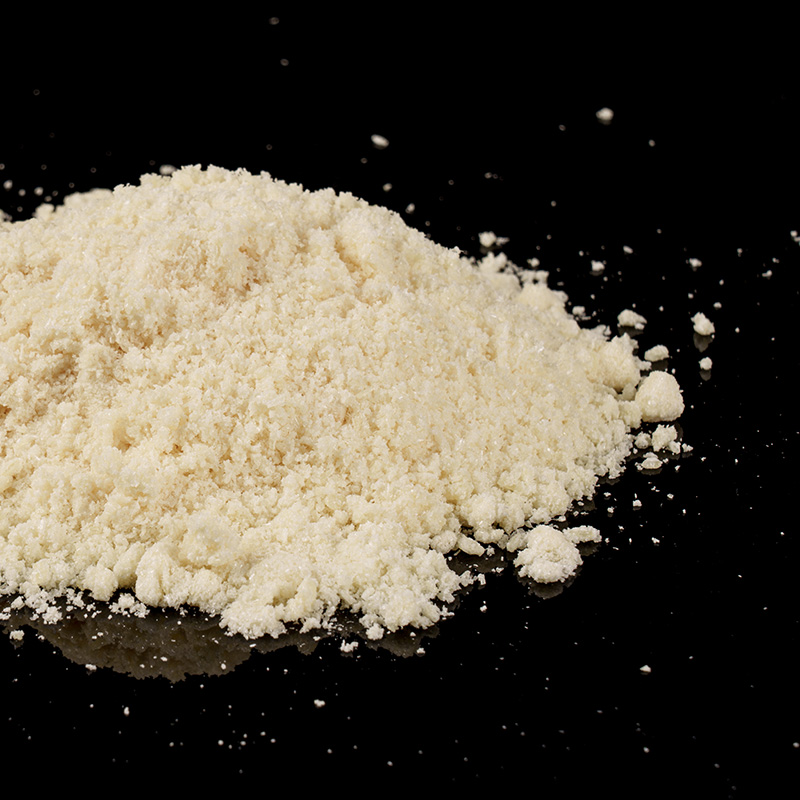
Poly(ethylene 2,5-furandicarboxylate) (PEF) outperforms conventional PET across several critical mechanical and barrier properties, making it a technically superior candidate for rigid packaging applications — particularly bottles, trays, and containers requiring extended shelf life. While PEF is not yet a universal drop-in replacement for PET due to processing differences and cost constraints, its measurable advantages in stiffness, gas barrier performance, and thermal resistance present compelling opportunities for brand owners seeking bio-based, high-performance packaging materials.
The mechanical performance of Poly(ethylene 2,5-furandicarboxylate) (PEF) has been extensively benchmarked against PET in peer-reviewed literature and commercial development programs. The differences are not marginal — they are structurally significant and directly influence design decisions in rigid packaging.
| Property | PEF | PET | PEF Advantage |
|---|---|---|---|
| Glass Transition Temp (Tg) | ~86–90°C | ~75–80°C | +10–12°C higher |
| Young's Modulus | ~2.5–3.0 GPa | ~2.0–2.5 GPa | ~20% stiffer |
| Tensile Strength | ~60–75 MPa | ~55–70 MPa | Comparable to slightly higher |
| O₂ Barrier (relative) | ~4–10× better than PET | Baseline | Significant |
| CO₂ Barrier (relative) | ~3–5× better than PET | Baseline | Significant |
| Water Vapor Barrier (relative) | ~2× better than PET | Baseline | Moderate |
| Density | ~1.43–1.54 g/cm³ | ~1.33–1.40 g/cm³ | Slightly higher (neutral) |
The higher Young's modulus of Poly(ethylene 2,5-furandicarboxylate) (PEF) — approximately 20% greater than PET — translates directly into increased wall stiffness per unit thickness. For rigid packaging designers, this offers a meaningful lightweighting opportunity: achieving equivalent structural performance with reduced material per container.
For example, a standard 0.5 L PET water bottle uses a wall thickness of approximately 0.25–0.35 mm. Equivalent top-load performance in PEF could theoretically be achieved at a reduced wall thickness, contributing to lower resin consumption per unit. This advantage is particularly relevant in sectors where package weight reduction is a sustainability or logistics target.
The furan ring in PEF's backbone is more rigid and less symmetric than PET's benzene ring, which restricts chain mobility and elevates both Tg and modulus. This is not an additive-dependent effect — it is intrinsic to the polymer architecture of Poly(ethylene 2,5-furandicarboxylate) (PEF), meaning the mechanical benefit is consistent across production batches without requiring nucleating agents or reinforcing fillers.
Among all the mechanical and physical properties of Poly(ethylene 2,5-furandicarboxylate) (PEF), its gas barrier performance represents the most commercially transformative difference relative to PET. Published data from Avantium — the primary developer of PEF at commercial scale — and independent academic sources consistently report:
For a 330 mL beer bottle made from Poly(ethylene 2,5-furandicarboxylate) (PEF), the improved O₂ barrier could extend shelf life from approximately 16 weeks (typical for PET monolayer) to over 26 weeks without any additional barrier coating or multi-layer construction. This is a significant value proposition for brewers and beverage brand owners who currently rely on expensive multi-layer PET or glass packaging to achieve adequate shelf life.
The physical origin of this barrier superiority lies in the reduced chain mobility and lower free volume of the PEF matrix, which impedes gas diffusion through the amorphous phase. The furan ring's conformational rigidity plays a central role — the same structural feature that raises Tg also tightens the polymer network against molecular permeation.
The elevated glass transition temperature of Poly(ethylene 2,5-furandicarboxylate) (PEF) — approximately 86–90°C versus 75–80°C for PET — has direct implications for hot-fill packaging applications. Hot-fill processes typically require the container to withstand filling temperatures of 85–95°C without deformation. Standard PET requires heat-setting during blow molding (producing HPET) to achieve this; PEF's intrinsically higher Tg provides a broader safety margin.
This means that amorphous or lightly crystallized PEF containers may tolerate hot-fill conditions that would require specially engineered PET grades, potentially simplifying the manufacturing process for juice, tea, or isotonic beverage applications. However, it should be noted that PEF's melting point (~215–235°C) is slightly lower than PET's (~250–260°C), which constrains processing headroom during injection molding and requires careful temperature control to avoid thermal degradation.
One of the most important practical differences for packaging converters is that Poly(ethylene 2,5-furandicarboxylate) (PEF) crystallizes significantly more slowly than PET. The crystallization half-time of PEF at its optimal crystallization temperature is several times longer than that of PET, which has two direct consequences for rigid packaging production:
For packaging converters running existing PET ISBM (injection stretch blow molding) lines, retrofitting for Poly(ethylene 2,5-furandicarboxylate) (PEF) requires adjustment of preform reheat profiles and blow mold temperature control. The slower crystallization kinetics mean that PEF is more forgiving of rapid cooling but less responsive to nucleation-based orientation strengthening strategies used in PET bottle manufacturing.
While Poly(ethylene 2,5-furandicarboxylate) (PEF) excels in stiffness and barrier performance, its elongation at break in the amorphous state is generally lower than that of PET, reflecting its more rigid backbone. Reported elongation at break for unoriented PEF films is typically in the range of 5–30%, compared to PET values that can reach 50–300% depending on molecular weight and crystallinity.
In biaxially oriented form — as achieved in stretch blow molded bottles — PEF can recover much of this ductility through strain-induced alignment. However, for applications requiring significant deformation tolerance, such as squeezable containers or impact-critical closures, PEF in its current commercial form may require blending or structural design accommodations to match PET's toughness profile.
This is not a disqualifying limitation for rigid packaging — most rigid bottles, trays, and jars are not designed around high elongation requirements. But it is a relevant consideration when specifying PEF for caps, closure systems, or thin-walled containers subject to drop-impact testing requirements.
Based on its mechanical and barrier property profile, Poly(ethylene 2,5-furandicarboxylate) (PEF) is best suited for the following rigid packaging formats:
Applications where PEF may be less competitive in its current form include large-format water bottles (where barrier advantage is less critical and cost sensitivity is high), squeeze tubes, and closures requiring high elongation or snap-fit mechanics. As production scales increase and the cost gap with PET narrows — currently PEF resin costs significantly more than commodity PET — the range of viable rigid packaging applications for Poly(ethylene 2,5-furandicarboxylate) (PEF) is expected to expand substantially.

Copyright© Zhejiang Sugar Energy Technology Co., Ltd. All Rights Reserved.
 Custom Biobased Polymer Manufacturers
 英语
英语 中文简体
中文简体